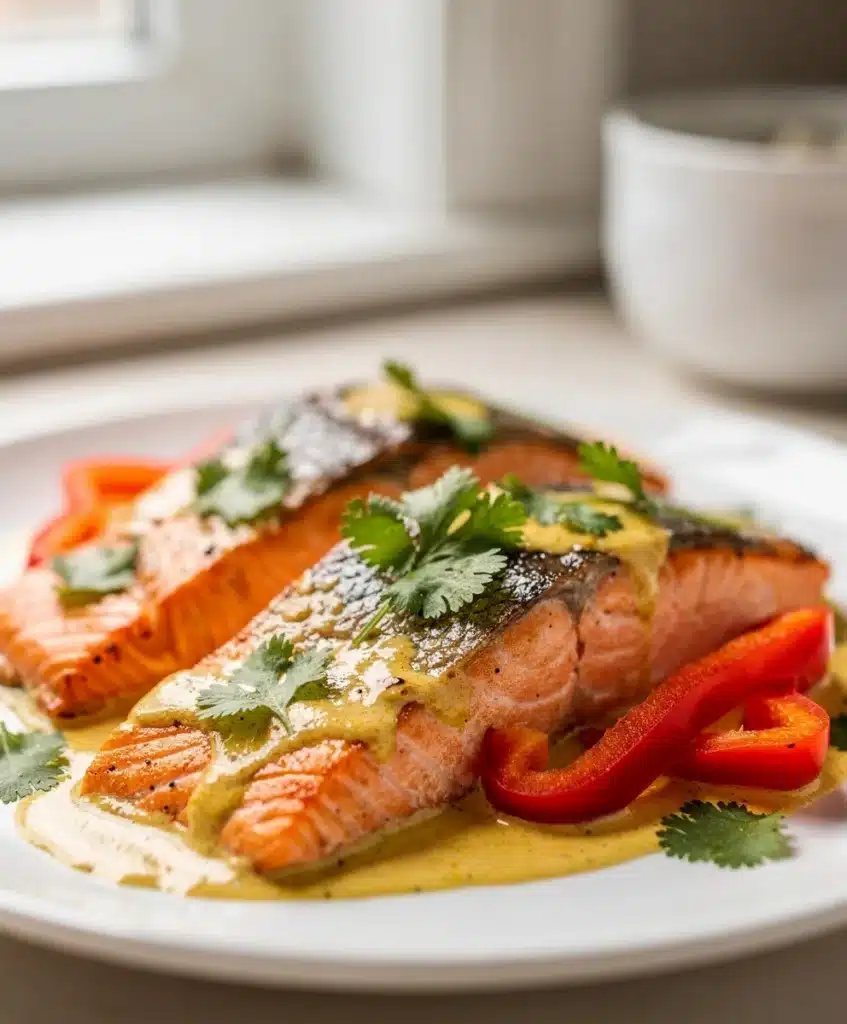
The key to a sauce that clings to the salmon instead of pooling underneath is a quick simmer after adding the coconut milk. This gentle reduction concentrates the flavors and creates the perfect texture for our Coconut Curry Salmon. I learned this little trick after one too many dinners where my beautiful sauce ended up more like a soup at the bottom of the plate. It was a game-changer, turning a good dish into a truly great one.
This Coconut Curry Salmon recipe is my answer to those nights when you crave something deeply flavorful, nourishing, and incredibly simple. It’s a cozy, one-pan wonder that brings the vibrant, aromatic warmth of curry right to your weeknight table. Forget complicated spice blends or hours of simmering. We’re using smart, simple ingredients to build layers of flavor that make this salmon feel special, without the fuss. It’s comfort food, made easy, and it’s about to become your new favorite way to enjoy this healthy, versatile fish.
Table of Contents
Coconut Curry Salmon

A cozy, one-pan wonder that brings vibrant, aromatic warmth to your weeknight table. This recipe uses smart, simple ingredients to build layers of flavor in just 30 minutes. The key is a quick simmer of the coconut milk to create a sauce that clings perfectly to the salmon.
- Prep Time: 10min
- Cook Time: 20min
- Total Time: 30min
- Yield: 4 servings 1x
- Category: dinner
- Method: pan-searing, simmering
- Cuisine: Thai-inspired
- Diet: Gluten Free
Ingredients
- 4 (6-ounce) salmon fillets, skin-on or skinless
- 1 tablespoon olive oil or avocado oil
- 1 teaspoon kosher salt
- ½ teaspoon black pepper
- 1 tablespoon coconut oil or olive oil
- 1 small yellow onion, finely diced
- 3 cloves garlic, minced
- 1 tablespoon fresh ginger, grated
- 2–3 tablespoons red curry paste
- 1 (13.5-ounce) can full-fat coconut milk
- 1 tablespoon fish sauce
- 1 tablespoon fresh lime juice
- 1 teaspoon coconut sugar or brown sugar (optional)
- ½ cup red bell pepper, thinly sliced
- Fresh cilantro and lime wedges, for serving
Instructions
- Pat salmon fillets dry with paper towels. Season all over with salt and pepper.
- Heat olive oil in a large skillet over medium-high heat. Add salmon, presentation-side down, and sear for 3-4 minutes until a golden crust forms. Flip and cook 1 more minute. Remove to a plate.
- Reduce heat to medium. Add coconut oil to the skillet. Add onion and cook 3-4 minutes until softened.
- Add garlic, ginger, and curry paste. Stir constantly for 1 minute until fragrant.
- Pour in coconut milk, fish sauce, lime juice, and sugar (if using). Add bell pepper. Scrape up browned bits. Bring to a gentle simmer and cook 5-7 minutes to thicken slightly.
- Nestle salmon back into the sauce. Spoon sauce over the top. Cover and cook 5-7 minutes more, until salmon flakes easily.
- Remove from heat. Garnish with cilantro and serve with lime wedges.
Notes
For a vegetarian version, use firm tofu and substitute fish sauce with soy sauce. Always pat salmon dry for a good sear. Let the sauce simmer to thicken and cling to the fish. Do not overcrowd the pan when searing.
Nutrition
- Serving Size: 4
- Calories: 480
- Sugar: 4
- Sodium: 950
- Fat: 35
- Saturated Fat: 20
- Unsaturated Fat: 12
- Trans Fat: 0
- Carbohydrates: 9
- Fiber: 2
- Protein: 34
- Cholesterol: 80
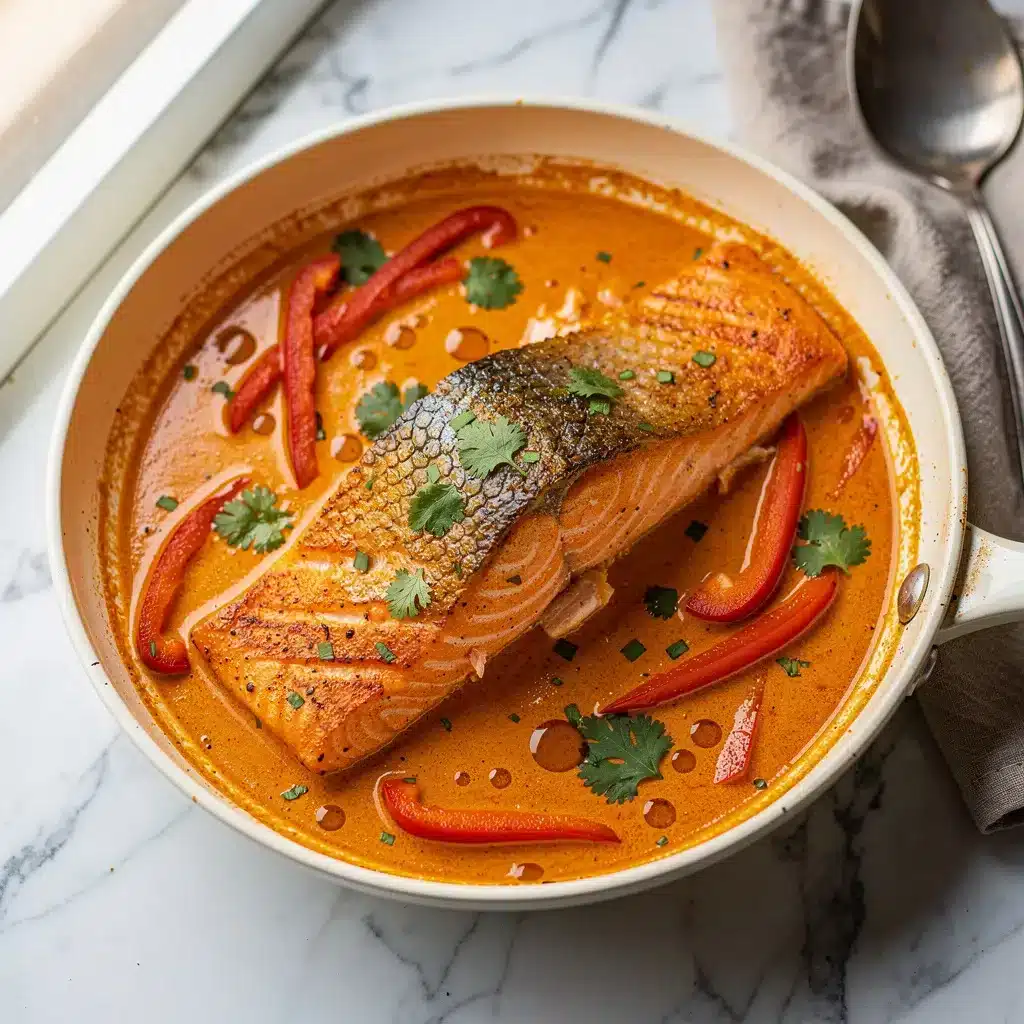
Ingredients List for Coconut Curry Salmon
Coconut Curry Salmon comes together with a handful of simple ingredients, many of which you might already have in your pantry. The magic is in how we layer them.
For the Salmon:
- 4 (6-ounce) salmon fillets, skin-on or skinless
- 1 tablespoon olive oil or avocado oil
- 1 teaspoon kosher salt
- ½ teaspoon black pepper
For the Coconut Curry Sauce:
- 1 tablespoon coconut oil or olive oil
- 1 small yellow onion, finely diced
- 3 cloves garlic, minced
- 1 tablespoon fresh ginger, grated
- 2-3 tablespoons red curry paste (adjust for your heat preference)
- 1 (13.5-ounce) can full-fat coconut milk
- 1 tablespoon fish sauce (or soy sauce/tamari for a vegetarian version)
- 1 tablespoon fresh lime juice
- 1 teaspoon coconut sugar or brown sugar (optional, to balance acidity)
- ½ cup red bell pepper, thinly sliced
- Fresh cilantro and lime wedges, for serving
Smart Swaps & Notes:
- Salmon: You can use other firm fish like cod or halibut. Adjust cooking time slightly as they may cook faster.
- Curry Paste: Red curry paste is my favorite here, but yellow or green would work beautifully, too. Check the label if you need gluten-free.
- Coconut Milk: Full-fat gives the sauce its luxurious, creamy body. Light coconut milk will work but the sauce will be thinner.
- Vegetarian: Use a firm tofu block (pressed and cubed) in place of salmon and substitute the fish sauce with soy sauce.
Timing for Coconut Curry Salmon
This dish is famously quick, which is a huge part of its appeal for busy nights.
- Prep Time: 10 minutes
- Cook Time: 20 minutes
- Total Time: 30 minutes
That’s right—from fridge to table in half an hour. It’s about 40% faster than many traditional baked salmon recipes in the oven that require longer marinating or baking times, and it delivers so much more complexity in each bite.
Step-by-Step Instructions for Coconut Curry Salmon
Follow these simple steps for a foolproof, flavorful dish every single time.
1. Season and Sear the Salmon.
Pat your salmon fillets very dry with paper towels. This is the secret to getting a nice sear instead of steam. Season them generously on all sides with salt and pepper. Heat the tablespoon of olive oil in a large skillet (I prefer cast iron or stainless steel for a good crust) over medium-high heat. Once the oil is shimmering, add the salmon fillets, presentation-side down. Sear for 3-4 minutes until a golden-brown crust forms. Don’t move them! Let them do their thing. Flip carefully and cook for just 1 more minute on the other side. Remove the salmon to a clean plate. It will not be cooked through yet, and that’s perfect.
2. Build the Aromatic Base.
Reduce the heat to medium. In the same skillet, add the coconut oil. Add the diced onion and cook for 3-4 minutes until softened and translucent. Add the garlic, ginger, and curry paste. Stir constantly for about 60 seconds until incredibly fragrant. This step “blooms” the spices in the paste, waking up their oils and deepening the flavor foundation of your Coconut Curry Salmon sauce.
3. Create the Creamy Sauce.
Pour in the entire can of coconut milk, along with the fish sauce, lime juice, and coconut sugar if using. Use your spatula to scrape up any delicious browned bits from the bottom of the pan—that’s pure flavor. Add the sliced bell pepper. Bring the sauce to a gentle simmer. Let it bubble away for 5-7 minutes. This is that crucial reduction time! Watch as the sauce thickens slightly and turns a rich, creamy color.
4. Finish Cooking the Salmon.
Nestle the partially cooked salmon fillets back into the simmering sauce. Spoon some of the sauce over the top of each fillet. Reduce the heat to medium-low, cover the skillet with a lid (or a baking sheet if you don’t have one), and let it cook for another 5-7 minutes. The salmon is done when it flakes easily with a fork and reaches an internal temperature of 125-130°F for medium. Remember, it will continue to cook a bit from residual heat.
5. Garnish and Serve.
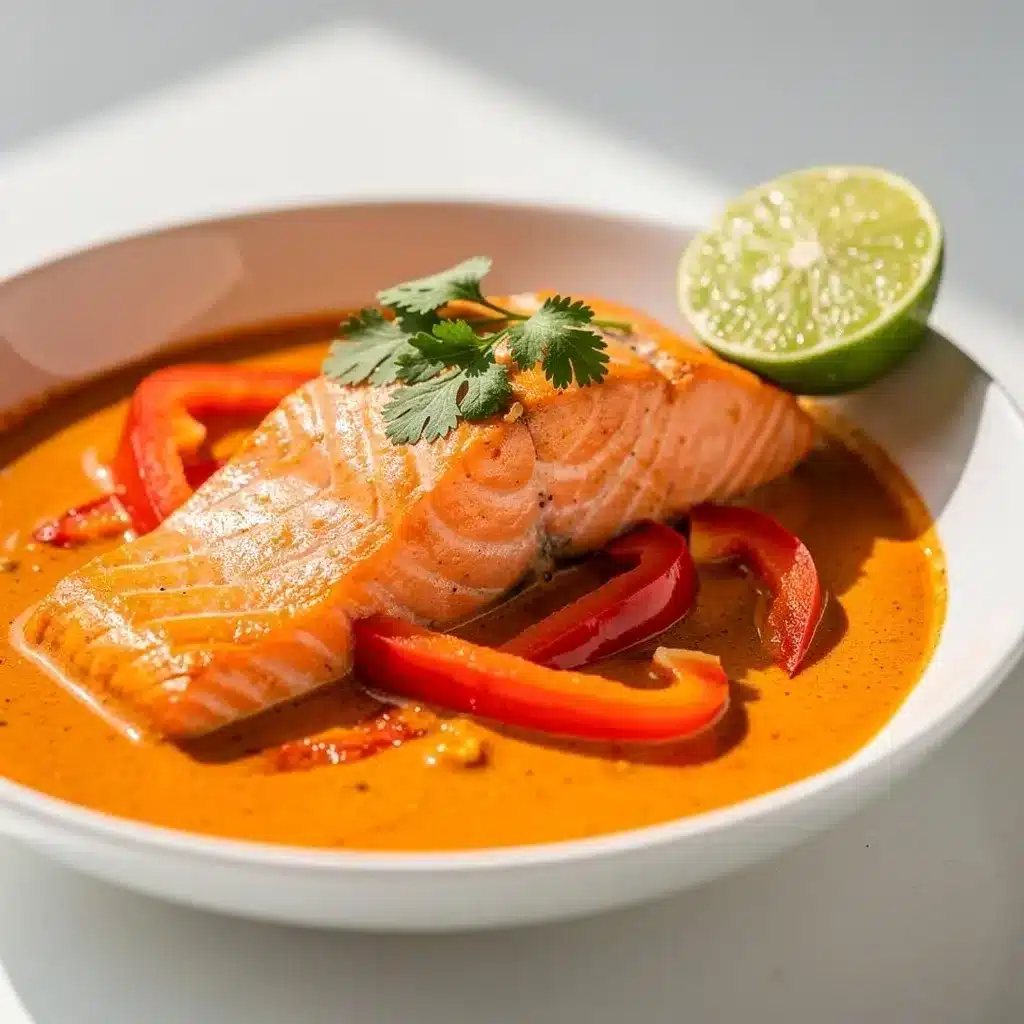
Remove the skillet from the heat. Taste the sauce and adjust seasoning—maybe a pinch more salt or a squeeze of lime. Scatter a handful of fresh cilantro over the top and serve immediately with lime wedges on the side.
Nutritional Information for Coconut Curry Salmon
This dish is as nourishing as it is delicious. One serving (one salmon fillet with sauce) provides approximately:
- Calories: ~480
- Protein: 34g
- Carbohydrates: 9g
- Fat: 35g (primarily healthy fats from salmon and coconut)
- Fiber: 2g
Salmon is an excellent source of high-quality protein and omega-3 fatty acids, which are wonderful for heart and brain health. The coconut milk provides medium-chain triglycerides (MCTs), and the garlic, ginger, and spices offer anti-inflammatory benefits. It’s a meal that truly feeds your body and soul.
Equipment Needed for Coconut Curry Salmon
You only need a few basic kitchen tools to make this recipe a success.
- A large skillet (10-12 inches) with a lid. Cast iron, stainless steel, or a large non-stick pan all work well.
- A sharp knife and cutting board.
- A microplane or fine grater for the ginger.
- A spatula or fish turner for flipping the salmon.
- Measuring spoons.
Why You’ll Love This Coconut Curry Salmon
This recipe has earned a permanent spot in my dinner rotation for so many reasons.
- Maximum Flavor, Minimal Effort. In 30 minutes, you get a restaurant-quality dish that feels luxurious and special.
- One-Pan Wonder. Less cleanup is always a win in my book. Everything cooks in a single skillet.
- Endlessly Adaptable. It’s easy to swap proteins or veggies based on what you have. Try it with shrimp or chickpeas!
- Family-Friendly & Impressive. The creamy, mildly spicy sauce is usually a hit with all ages, and it looks beautiful when you serve it.
- Health-Packed Comfort Food. It satisfies that craving for something rich and cozy while being genuinely good for you.
Healthier Alternatives for Coconut Curry Salmon
This recipe is already quite balanced, but here are some easy tweaks if you’re looking for specific adjustments.
- Lower Fat: Use light coconut milk and reduce the initial searing oil to 2 teaspoons. The sauce will be less creamy but still flavorful.
- Higher Protein: The salmon is already protein-packed! Serve it over a bed of lentils or edamame noodles to boost it even further.
- Extra Veggies: This sauce is a perfect vehicle for vegetables. Stir in a couple handfuls of baby spinach right at the end, or add broccoli florets or snap peas when you add the bell pepper.
- Sugar-Free: Simply omit the optional coconut sugar. The sauce will be a bit more tangy and savory, which is also delicious.
Serving Suggestions for Coconut Curry Salmon
The beauty of this Coconut Curry Salmon is how it pairs with so many simple sides.
- For Soaking Up the Sauce: Serve it over a bed of fluffy jasmine rice, basmati rice, or quinoa. For a low-carb option, cauliflower rice is fantastic.
- With a Simple Veg: Steamed broccoli, sautéed green beans, or a quick cucumber salad provide a fresh, crisp contrast.
- For a Heartier Meal: Ladle the salmon and sauce over a bowl of rice noodles for a curry noodle bowl experience.
- Garnish Galore: Don’t skip the fresh herbs! Cilantro is classic, but Thai basil or sliced green onions are also wonderful. A sprinkle of chopped peanuts or cashews adds a lovely crunch.
If you love the creamy, aromatic quality of this dish, you might also enjoy my Thai Coconut Chicken Soup or my Ginger Carrot Soup, which uses coconut milk for a similarly luxurious texture.
Common Mistakes to Avoid with Coconut Curry Salmon
A few small missteps can change the outcome. Here’s how to avoid them.
- Not Drying the Salmon. Moisture is the enemy of a good sear. Always pat your fillets thoroughly dry before seasoning.
- Crowding the Pan. Give the salmon space in the skillet. If necessary, cook in two batches. Crowding steams the fish instead of searing it.
- Skipping the Simmer. Remember the hook? Adding the coconut milk and immediately putting the salmon back in will give you a thin, brothy sauce. Let it simmer and reduce to create that luscious, clingy texture that defines a great Coconut Curry Salmon.
- Overcooking the Salmon. Salmon cooks quickly and continues to cook off the heat. Remove it from the sauce when it’s just slightly under your desired doneness. It will be perfect by the time you get it to the table.
- Using Low-Fat Coconut Milk. The sauce relies on the fat in full-fat coconut milk for its body and richness. The light version often contains additives and water, leading to a less satisfying result.
Storing Tips for Coconut Curry Salmon
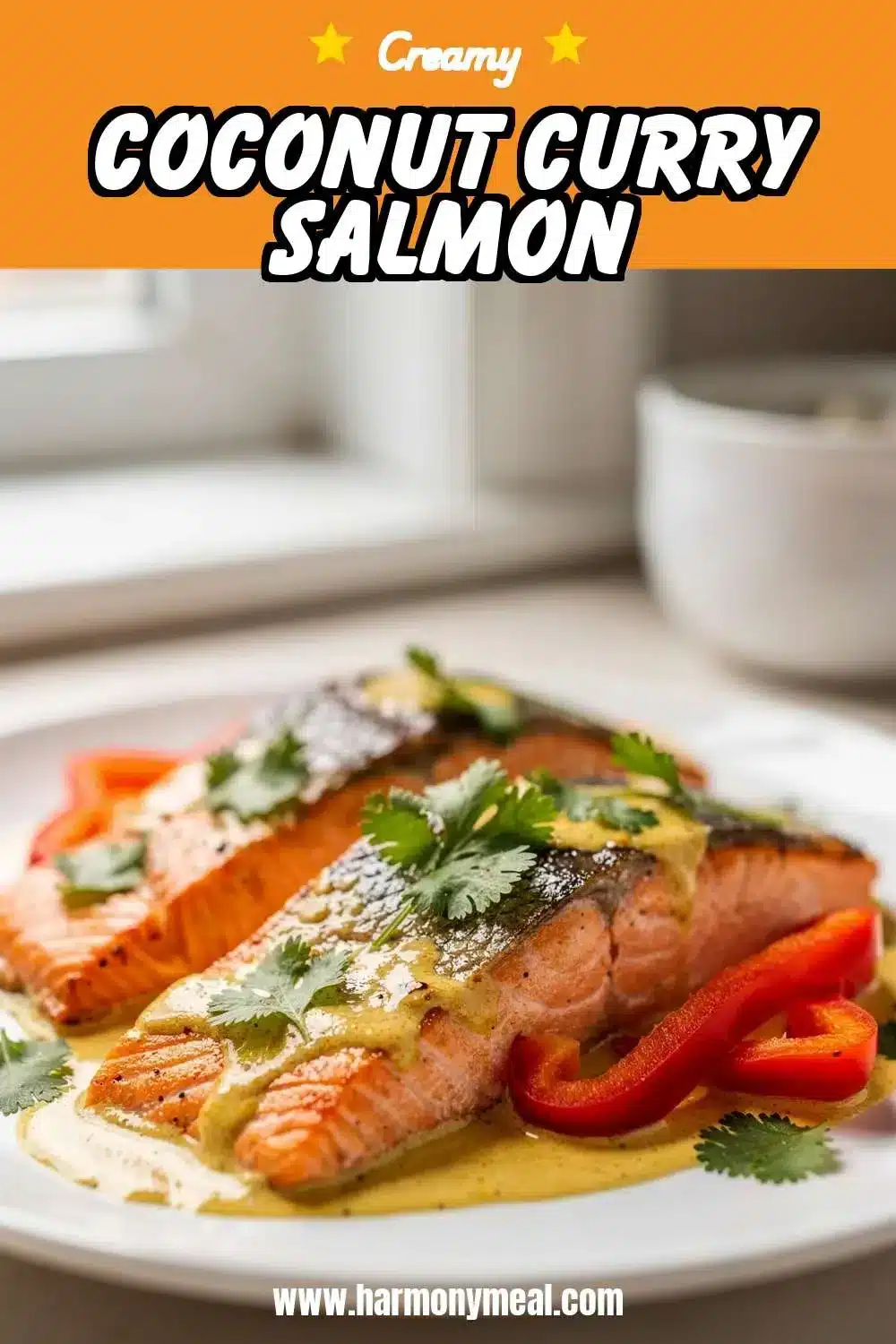
This dish makes fantastic leftovers, as the flavors meld and deepen overnight.
- Refrigerating: Store leftover Coconut Curry Salmon in an airtight container in the fridge for up to 3 days.
- Reheating: Gently reheat in a covered skillet over low heat, adding a splash of water or coconut milk to loosen the sauce if needed. You can also microwave it in 30-second intervals. Avoid high heat, which can toughen the salmon.
- Freezing: I don’t recommend freezing the cooked salmon, as the texture can become mealy. However, you can freeze the sauce base (onions, garlic, ginger, curry paste, and coconut milk) for up to 2 months. Thaw overnight in the fridge and reheat in a skillet before adding fresh salmon to cook.
- Meal Prep: You can dice the onion, mince the garlic, grate the ginger, and slice the bell pepper up to 3 days in advance. Store them separately in the fridge to make assembly even faster on a busy night.
Conclusion
This Coconut Curry Salmon recipe is everything I love about home cooking. It’s simple enough for a regular Tuesday, yet special enough to serve to guests. It brings bold, comforting flavors to the table with minimal fuss and maximum reward. Regular kitchen, regular time, great results.
Once you master this stovetop method, you’ll see how versatile the concept is. The same creamy curry sauce technique can be adapted for other proteins or even used as a base for other dishes. If you’re looking for more ways to enjoy salmon, my Blackened Salmon Tacos are a fun, flavorful twist, and my Pesto Crusted Salmon or Maple Dijon Salmon offer completely different but equally delicious profiles.
I truly hope this Coconut Curry Salmon becomes a cherished recipe in your home, too. Let me know how it turned out in the comments below, and don’t forget to tag @HarmonyMeal on Pinterest so I can see your beautiful creations. Happy cooking.
FAQs about Coconut Curry Salmon
What goes well with salmon curry?
Coconut curry salmon pairs well with a variety of side dishes. Consider serving it with steamed rice (like jasmine or basmati), naan bread, quinoa, roasted vegetables (such as broccoli, cauliflower, or bell peppers), or a fresh cucumber salad.
Is coconut curry salmon healthy?
Yes, coconut curry salmon can be a healthy dish. Salmon is rich in omega-3 fatty acids and protein. Coconut milk provides healthy fats, and the spices used in curry offer antioxidant benefits. However, the healthiness depends on the specific ingredients and cooking methods used; opt for low-sodium options and moderate amounts of coconut milk.
What is salmon curry made of?
Salmon curry typically consists of salmon fillets simmered in a sauce made from coconut milk, curry paste (red, green, or yellow), onions, garlic, ginger, and various spices like turmeric, coriander, cumin, and chili powder. Vegetables like bell peppers, spinach, or peas may also be added.
Can you freeze salmon curry?
Yes, you can freeze salmon curry. Allow the curry to cool completely before transferring it to an airtight container or freezer bag. For best results, consume within 2-3 months. Thaw overnight in the refrigerator before reheating.
What spice goes best with salmon?
While coconut curry salmon already incorporates many spices, other spices that complement salmon well include dill, paprika, garlic powder, lemon pepper, ginger, and smoked paprika. The best spice depends on the specific flavor profile you’re aiming for.
What kind of curry is best with salmon?
Red or green curry is often preferred with salmon, offering a balanced level of spice and aromatic flavors. However, yellow curry can also be delicious for a milder, sweeter taste. Ultimately, the best curry depends on your personal preference for heat and flavor.
💬 Lets Stay Connected!
For daily recipes, kitchen tips, and exclusive content, follow me on:
👉 Facebook for behind-the-scenes & community fun
👉 Pinterest for visual inspiration & meal ideas
👉 X (Twitter) for quick tips & trending recipes
📲 Join the flavor journey, your next favorite recipe is just a follow away!