Introduction
The first time I made jerky, I grabbed a flank steak and ended up with shoe leather. The best cut for beef jerky is actually a lean, firm roast like top round. I learned this the hard way after wasting a perfectly good piece of meat and several hours of my Sunday afternoon. That kitchen disaster taught me a lesson I still carry today when I fire up my dehydrator.
My neighbor, a retired butcher who grew up making jerky on his family's ranch, finally set me straight. He showed me how the right cut transforms the entire jerky-making experience. Now I want to share that same wisdom with you. Whether you're a jerky veteran or a curious first-timer, understanding which cut to choose makes all the difference between chewy success and disappointing failure.
Making jerky at home feels like a small victory. It fills your kitchen with that savory, smoky aroma that promises something satisfying. And when you nail the cut, the texture turns out perfect every time. Let me walk you through exactly why top round deserves the spotlight and how to pick the best meat for jerky like a pro.
Table of Contents
PrintBest Cut for Beef Jerky

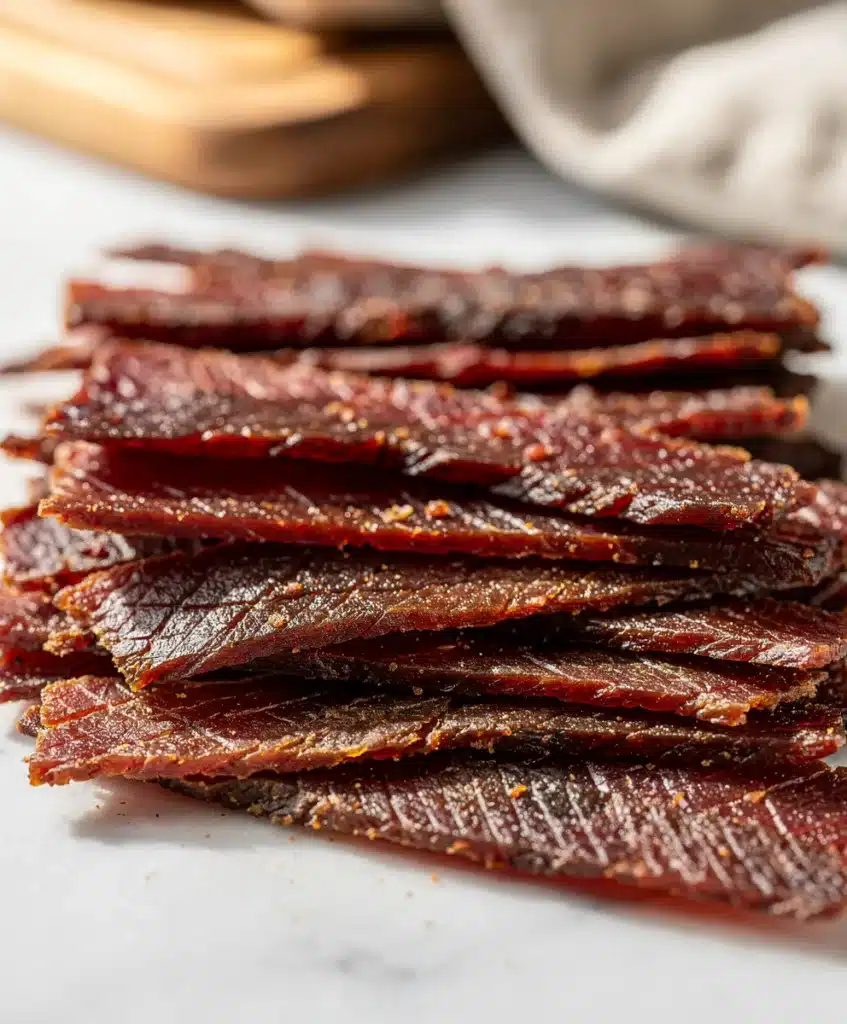
This recipe uses top round, the best cut for beef jerky, to create a chewy, flavorful snack. The lean meat absorbs a savory marinade and dehydrates to perfection. Perfect for hiking, lunchboxes, or anytime snacking.
- Prep Time: 15min
- Cook Time: 5h
- Total Time: 16h 15min
- Yield: 8 servings 1x
- Category: snack
- Method: dehydrating
- Cuisine: American
- Diet: Gluten Free
Ingredients
- 2 pounds top round, trimmed of any silver skin
- 1/2 cup low-sodium soy sauce
- 1/4 cup Worcestershire sauce
- 2 tablespoons brown sugar
- 1 tablespoon smoked paprika
- 2 teaspoons garlic powder
- 2 teaspoons onion powder
- 1 teaspoon black pepper
- 1 teaspoon red pepper flakes (optional for heat)
- 1/2 teaspoon curing salt (optional for longer storage)
Instructions
- Place the top round in the freezer for about an hour to firm it up for easier slicing.
- Slice the meat against the grain into 1/4 inch thick strips.
- In a bowl, whisk together soy sauce, Worcestershire sauce, brown sugar, smoked paprika, garlic powder, onion powder, black pepper, red pepper flakes, and curing salt until the sugar dissolves.
- Place the sliced meat in a large zip-top bag or glass dish. Pour the marinade over the meat, ensuring all pieces are coated. Seal and refrigerate for 8 to 12 hours, flipping halfway through.
- Remove the meat from the marinade and pat each slice dry with paper towels.
- Arrange the slices on dehydrator trays without overlapping, leaving small gaps for air circulation.
- Dehydrate at 165°F for 4 to 6 hours, or until the jerky bends and cracks slightly but does not snap. Rotate trays halfway through if needed.
- Let the jerky cool completely before storing in an airtight container.
Notes
For oven method, set to lowest temperature (around 170°F) and prop door open slightly with a wooden spoon. Drying time may vary. Store in a cool, dark pantry for up to 2 months, refrigerate for 4 months, or freeze for up to a year.
Nutrition
- Serving Size: 8
- Calories: 80
- Sugar: 2
- Sodium: 450
- Fat: 2
- Saturated Fat: 0.5
- Unsaturated Fat: 1
- Trans Fat: 0
- Carbohydrates: 3
- Fiber: 0
- Protein: 15
- Cholesterol: 35
Why Top Round Is the Best Cut for Beef Jerky
Top round comes from the inner thigh of the cow, a muscle that does a lot of work but stays remarkably lean. This makes top round jerky the gold standard for homemade snacks. The meat contains very little fat, which means your jerky will last longer without turning rancid. Fat spoils quickly, and nobody wants a batch of jerky that smells off after two weeks.
The grain of top round runs in long, clean lines. When you slice against that grain, each piece of jerky tears apart easily without feeling tough or stringy. Flank steak jerky has a much tighter grain structure that can feel chewy and dense. Eye of round jerky works in a pinch, but it tends to be drier because the muscle is smaller and cooks faster.
Top round also absorbs marinades beautifully. The lean fibers soak up flavors like soy sauce, Worcestershire, and spices without becoming mushy. You get that deep, concentrated taste in every bite. Plus, top round is budget-friendly. It costs significantly less than sirloin or ribeye, making it perfect for large batches.
Ingredients for Perfect Top Round Jerky
The best cut for beef jerky deserves a simple, balanced marinade that lets the meat shine. Here is what you need for a classic savory-sweet batch that will disappear fast.

- 2 pounds top round, trimmed of any silver skin
- 1/2 cup low-sodium soy sauce
- 1/4 cup Worcestershire sauce
- 2 tablespoons brown sugar
- 1 tablespoon smoked paprika
- 2 teaspoons garlic powder
- 2 teaspoons onion powder
- 1 teaspoon black pepper
- 1 teaspoon red pepper flakes (optional for heat)
- 1/2 teaspoon curing salt (optional for longer storage)
You can swap soy sauce for coconut aminos if you need a gluten-free option. Brown sugar can become honey or maple syrup for a different sweetness profile. The smoked paprika adds that campfire flavor without needing a smoker.
Timing for This Jerky Recipe
- Prep time: 15 minutes
- Marinating time: 8 to 12 hours (overnight is best)
- Dehydrating time: 4 to 6 hours at 165°F
- Total time: Approximately 16 to 18 hours
Plan ahead because the marinating step makes a huge difference. Rushing this part means less flavorful jerky. Your patience rewards you with deep, complex taste that store-bought bags never achieve.
Step-by-Step Instructions for Top Round Jerky
Prepare the Meat
Place your top round in the freezer for about an hour. This firms up the meat, making it much easier to slice thin and even. Partially frozen meat cuts like butter. Aim for slices about 1/4 inch thick. Too thick and the jerky takes forever to dry. Too thin and it crumbles into pieces.
Slice Against the Grain
Look at the muscle fibers running through the meat. Slice perpendicular to those lines. This creates jerky that breaks cleanly when you bite into it. If you slice with the grain, you end up with jerky that feels like chewing rope.
Make the Marinade
Whisk together soy sauce, Worcestershire, brown sugar, and all the spices in a bowl until the sugar dissolves completely. Taste the marinade. It should be salty, sweet, and slightly smoky. Adjust the heat level now with extra red pepper if you like spicy jerky.
Marinate the Meat
Place your sliced top round in a large zip-top bag or glass dish. Pour the marinade over the meat, making sure every piece gets coated. Seal the bag and massage it gently to distribute the liquid. Refrigerate for at least 8 hours, flipping the bag halfway through.
Dehydrate the Jerky
Remove the meat from the marinade and pat each slice dry with paper towels. Arrange the pieces on dehydrator trays without overlapping. Leave small gaps between slices for air circulation. Set your dehydrator to 165°F and let it run for 4 to 6 hours.
Check for doneness by bending a piece. It should crack slightly but not snap in half. The jerky should feel dry to the touch with no visible moisture. Let it cool completely before storing.
Nutritional Information for Top Round Jerky
A one-ounce serving of homemade top round jerky contains approximately 80 calories, 15 grams of protein, 2 grams of fat, and 3 grams of carbohydrates. This jerky beef cut delivers high protein with minimal fat, making it an excellent snack for active lifestyles.
Top round is rich in iron, zinc, and B vitamins. Iron supports healthy blood cells, while zinc boosts immune function. The lean protein helps repair muscles after workouts and keeps you feeling full between meals. Compared to store-bought jerky, homemade versions have less sodium and no preservatives or artificial flavors.
Equipment Needed for Top Round Jerky
You do not need fancy tools to make excellent jerky at home. A sharp knife matters most. A good chef's knife or slicing knife makes thin, even cuts possible. Dull blades tear the meat and create uneven pieces that dry at different rates.
A food dehydrator gives you consistent results every time. Look for one with adjustable temperature settings and good air circulation. An oven works too if you set it to the lowest temperature and prop the door open slightly with a wooden spoon.
You also need mixing bowls, measuring spoons, and a zip-top bag or glass container for marinating. Paper towels help dry the meat before dehydrating. Airtight jars or vacuum-sealed bags keep your finished jerky fresh for weeks.
Why You Will Love This Recipe
This recipe uses the best cut for beef jerky to create snackable perfection that saves you money. Here is why it belongs in your regular rotation.
- Budget-friendly: Top round costs less than premium cuts but delivers superior jerky texture.
- Customizable: Adjust the marinade ingredients to create sweet, spicy, or savory variations.
- Meal prep friendly: Make a large batch on Sunday and enjoy protein-packed snacks all week.
- Kid approved: Homemade jerky contains no mystery ingredients or excessive sodium.
- Travel ready: Jerky packs easily for hikes, road trips, or lunchboxes without refrigeration.
Healthier Alternatives for Top Round Jerky

You can adapt this jerky beef cut recipe to fit different dietary needs without sacrificing flavor. For a lower sodium version, use reduced-sodium soy sauce and skip the curing salt. The spices provide plenty of taste without the extra salt.
If you are avoiding sugar, replace brown sugar with monk fruit sweetener or omit it entirely. The Worcestershire sauce adds enough sweetness to balance the savory elements. For a spicy kick, add extra cayenne or chipotle powder instead of sugar.
Gluten-free eaters should check their Worcestershire sauce labels. Many brands contain malt vinegar from barley. Look for certified gluten-free versions or substitute with coconut aminos and a splash of apple cider vinegar.
Serving Suggestions for Top Round Jerky
Top round jerky works as a standalone snack, but it also shines in creative serving situations. Pack a few strips in lunchboxes for a protein boost that keeps kids satisfied through afternoon classes. Bring a bag on hiking trips for lightweight, nutrient-dense fuel that never spoils.
Crumble jerky over salads for a savory crunch that beats any crouton. Add chopped pieces to homemade trail mix with nuts, seeds, and dried fruit. Serve jerky alongside cheese and crackers for a rustic appetizer board that impresses guests.
For game day gatherings, arrange jerky strips on a platter with pickles, mustards, and soft pretzels. The smoky, salty flavor pairs beautifully with cold beer or sparkling water. You can even rehydrate jerky in hot broth to create a quick, savory soup base.
Common Mistakes to Avoid with Top Round Jerky
The most common mistake when using the best cut for beef jerky is slicing too thick. Thick slices take forever to dry and often end up with a raw center. Stick to 1/4 inch or slightly thinner for consistent results.
Skipping the freezer step makes slicing difficult. Warm meat squishes and tears under the knife. Pop your top round in the freezer for an hour and thank me later.
Overcrowding the dehydrator traps moisture and extends drying time. Leave space between each slice so air circulates freely. Rotate trays halfway through for even drying.
Using too much marinade creates sticky, wet jerky that spoils quickly. Pat the meat dry before dehydrating to remove excess liquid. This step prevents bacterial growth and gives you a better texture.
Storing Tips for Top Round Jerky

Proper storage keeps your top round jerky fresh and delicious for months. Cool the jerky completely before packing it away. Warm jerky trapped in a sealed container creates condensation that leads to mold.
Store jerky in airtight glass jars or vacuum-sealed bags. Keep it in a cool, dark pantry for up to two months. Refrigeration extends the shelf life to four months. Freezing jerky keeps it good for a year or more.
Check your jerky periodically for any signs of moisture or off smells. If you see condensation inside the container, remove the jerky and let it air dry for a few hours before resealing. Adding a food-grade silica gel packet helps absorb excess moisture.
Conclusion
Finding the best cut for beef jerky changed my homemade snack game completely. Top round delivers that perfect balance of tenderness, flavor, and affordability that other cuts just cannot match. Flank steak jerky feels tough, eye of round jerky dries out too fast, but top round jerky hits the sweet spot every time.
I hope this guide helps you avoid the same mistakes I made on my first jerky attempt. The process takes some patience, but the reward is worth every minute. Homemade jerky tastes fresher, costs less, and lets you control exactly what goes into your food.
Now I want to hear from you. Have you tried making jerky with top round before? What is your favorite marinade combination? Drop a comment below and share your experience. Do not forget to tag @HarmonyMeal on Pinterest when you make your own batch. For more beef recipes that bring comfort to your table, check out my Slow Cooker Beef Stew or One-Pot Beef Taco Pasta. Happy snacking, friends.
FAQs about Best Cut for Beef Jerky
💬 Let’s Stay Connected!
For daily recipes, kitchen tips, and exclusive content, follow me on:
👉 Facebook for behind-the-scenes & community fun
👉 Pinterest for visual inspiration & meal ideas
👉 X (Twitter) for quick tips & trending recipes
📲 Join the flavor journey, your next favorite recipe is just a follow away!