Introduction
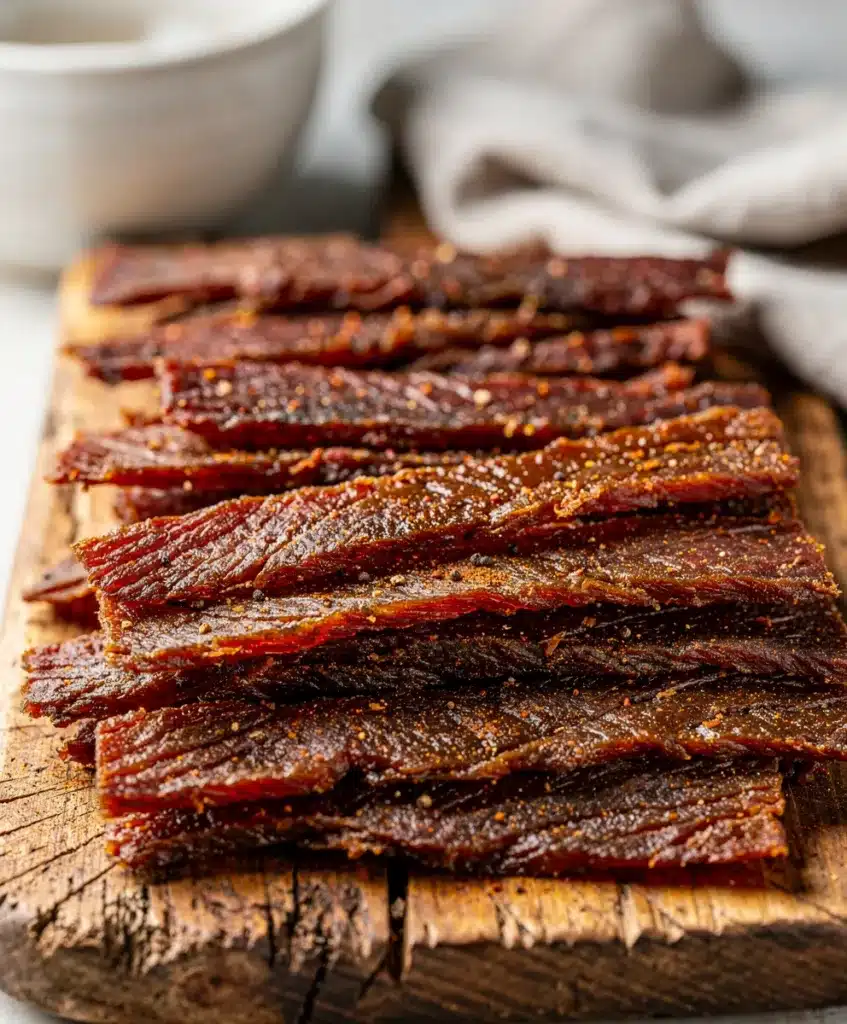
The humble soy sauce is the umami backbone of any great jerky, providing deep savory notes and that signature dark hue. In my traditional beef jerky marinade, I use a low-sodium variety to control the salt level without sacrificing flavor. I remember my dad pulling out his old dehydrator on weekends, the kitchen filling with the scent of garlic and soy, a promise of chewy, savory snacks to come. It felt like a special secret, turning simple beef into something magical. That’s the heart of this recipe: a simple, timeless process that yields incredible flavor. This isn’t about fancy gadgets or hard-to-find ingredients. It’s about a reliable, crave-worthy homemade jerky that you’ll want to make again and again. Whether you’re packing it for a hike, stashing it in a lunchbox, or just need a satisfying protein bite, this traditional beef jerky marinade is your new kitchen staple. Simple ingredients, warm memories.
Table of Contents
PrintTraditional Beef Jerky Marinade

A simple, timeless marinade that transforms lean beef into deeply savory, chewy homemade jerky. This recipe uses pantry staples like soy sauce and Worcestershire for a classic flavor, perfect for snacks, hikes, or meal prep. It is a rewarding kitchen project with a delicious, protein-packed reward.
- Prep Time: 20min
- Cook Time: 6h
- Total Time: 6h 20min plus marinating
- Yield: About 1 pound of jerky 1x
- Category: snack
- Method: dehydrating
- Cuisine: American
Ingredients
- 1.5 to 2 pounds lean beef (top round, eye of round, or flank steak), sliced against the grain
- 0.75 cup low sodium soy sauce
- 0.25 cup Worcestershire sauce
- 3 tablespoons brown sugar or honey
- 2 tablespoons apple cider vinegar or rice vinegar
- 2 teaspoons freshly cracked black pepper
- 1.5 teaspoons onion powder
- 1.5 teaspoons garlic powder
- 1 teaspoon smoked paprika
- 0.5 teaspoon red pepper flakes (optional)
Instructions
- Partially freeze the beef for 30-60 minutes until firm. Slice against the grain into 0.25-inch thick strips.
- In a large bowl or gallon-sized resealable bag, whisk together all marinade ingredients: soy sauce, Worcestershire sauce, brown sugar, vinegar, and spices.
- Add the beef strips to the marinade, ensuring each piece is coated. Seal the bag or cover the bowl. Refrigerate for at least 4 hours, ideally overnight (up to 24 hours).
- Remove beef from marinade, letting excess drip off. Pat strips gently with paper towels to remove surface moisture.
- Arrange strips in a single layer on dehydrator trays or on wire racks set over baking sheets for the oven.
- Dehydrate at 160°F (71°C) for 4 to 6 hours, or in a 170°F (75°C) oven with the door slightly ajar for the same time. Jerky is done when it bends and cracks but does not snap.
- Let the jerky cool completely at room temperature before storing.
Notes
For gluten-free jerky, use tamari or coconut aminos. Slicing against the grain is crucial for tender jerky. Always pat the meat dry after marinating to reduce dehydrating time. Store completely cooled jerky in an airtight container. It keeps for 1-2 months at room temperature or up to 6 months in the fridge.
Nutrition
- Serving Size: 4
- Calories: 70
- Sugar: 2
- Sodium: 350
- Fat: 2
- Saturated Fat: 1
- Unsaturated Fat: 1
- Trans Fat: 0
- Carbohydrates: 3
- Fiber: 0
- Protein: 11
- Cholesterol: 25
Ingredients List
This traditional beef jerky marinade starts with a handful of pantry staples that work together to create a perfectly balanced, deeply savory flavor. You likely have most of these in your kitchen right now.

- 1 ½ to 2 pounds lean beef (top round, eye of round, or flank steak work beautifully), sliced against the grain
- ¾ cup low-sodium soy sauce (the umami foundation)
- ¼ cup Worcestershire sauce (for tangy depth)
- 3 tablespoons brown sugar or honey (for caramelization and balance)
- 2 tablespoons apple cider vinegar or rice vinegar (a touch of brightness)
- 2 teaspoons freshly cracked black pepper
- 1 ½ teaspoons onion powder
- 1 ½ teaspoons garlic powder
- 1 teaspoon smoked paprika (adds a subtle smoky whisper)
- ½ teaspoon red pepper flakes (optional, for a gentle kick)
Smart Swaps: For a gluten-free version, use tamari or coconut aminos instead of soy sauce. If you prefer a less sweet profile, reduce the brown sugar to 2 tablespoons. You can also swap the smoked paprika for liquid smoke (just a ¼ teaspoon) if that’s what you have on hand. The goal is a flavorful, easy marinade recipe you can adapt.
Timing
Making jerky is more about patience than active cooking. The hands-on time is minimal, but the marinating and dehydrating require a little planning.
- Prep Time: 20 minutes (plus 4-24 hours marinating)
- Cook/Dehydrate Time: 4-6 hours
- Total Time: 4 ½ hours to 1 day+ (mostly hands-off)
While it takes time, the active work is less than making a batch of my Slow Cooker Beef Stew. Think of it as a weekend project with a delicious, protein-packed reward.
Step-by-Step Instructions
Follow these simple steps for the best homemade jerky you’ve ever tasted. The key is in the slice and the soak.
- Slice the Beef. Partially freeze your beef for about 30-60 minutes until it’s firm but not solid. This makes slicing much easier. Using a sharp knife, slice the meat against the grain into ¼-inch thick strips. Slicing against the grain ensures your finished jerky will be tender, not tough and stringy.
- Mix the Marinade. In a large bowl or a gallon-sized resealable bag, whisk together all the marinade ingredients: soy sauce, Worcestershire, brown sugar, vinegar, and all the spices. This jerky seasoning blend is what gives it that classic, irresistible flavor.
- Marinate. Add the beef strips to the marinade, ensuring each piece is well coated. Seal the bag or cover the bowl. Refrigerate for at least 4 hours, but ideally overnight (up to 24 hours). This long soak is non-negotiable for a deeply flavored traditional beef jerky marinade.
- Dry the Jerky. Remove the beef from the marinade, letting any excess drip off. Pat the strips gently with paper towels to remove surface moisture—this helps it dehydrate faster. Arrange the strips in a single layer on your dehydrator trays or on wire racks set over baking sheets for the oven method.
- Dehydrate.
- Dehydrator: Set to 160°F (71°C) and dehydrate for 4 to 6 hours. The jerky is done when it bends and cracks but does not snap in half.
- Oven: Set your oven to its lowest temperature (ideally 170°F or 75°C). Place the racks in the oven, leaving the door slightly ajar to allow moisture to escape. Dry for 4 to 6 hours, checking periodically.
- Cool and Store. Let the jerky cool completely at room temperature. This final step ensures the texture is perfect before you store it.
Nutritional Information
A 1-ounce serving (about 3-4 strips) of jerky made with this marinade provides approximately:
- Calories: 70
- Protein: 11g
- Fat: 2g
- Carbohydrates: 3g (primarily from the marinade sugars)
- Sodium: ~350mg (will vary based on soy sauce used)
This homemade jerky is a fantastic source of high-quality protein, making it a great post-workout snack or a sustaining bite on the go. Using lean beef and a controlled-sodium soy sauce helps keep it a smarter choice than many store-bought versions.
Equipment Needed
You don’t need specialized gear, but a few tools make the process smoother.
- A sharp chef’s knife for clean, even slicing.
- A large resealable bag or non-reactive bowl for marinating.
- Paper towels for patting the beef dry.
- A food dehydrator is ideal, but your oven works perfectly well.
- Wire cooling racks (if using the oven method) to allow for air circulation all around the meat.
Why You’ll Love This Recipe
This traditional beef jerky marinade recipe earns a permanent spot in your kitchen for so many reasons.
- Flavor You Control: No more mystery ingredients or excessive salt. You know exactly what’s in your snack.
- Incredibly Cost-Effective: Making homemade jerky is significantly cheaper than buying premium bags at the store.
- Perfect for Meal Prep: A single batch provides a week’s worth of high-protein snacks for lunches, hikes, or busy days.
- The Ultimate Customizable Canvas: Love it spicy? Add more pepper flakes. Prefer a sweeter note? A dash of maple syrup works wonders. This easy marinade recipe is your starting point.
- Satisfying Kitchen Project: There’s a simple joy in transforming a piece of beef into a shelf-stable, delicious treat. It’s a rewarding process.
Healthier Alternatives for the Recipe
You can easily tweak this soy sauce jerky base to fit different dietary needs without losing its soul-satisfying taste.

- Gluten-Free: Use tamari or certified gluten-free coconut aminos in place of soy sauce. Ensure your Worcestershire sauce is also gluten-free.
- Lower-Sugar: Replace the brown sugar with a sugar-free alternative like monk fruit sweetener, or simply reduce the amount by half.
- Paleo/Whole30: Use coconut aminos, omit the sugar, and ensure your Worcestershire sauce is compliant (or make your own).
- Extra Lean: Choose the leanest cut possible, like eye of round, and trim all visible fat before slicing. Fat doesn’t dehydrate well and can cause spoilage.
Serving Suggestions
While jerky is famously a grab-and-go snack, it can be so much more!
- Trail Mix Upgrade: Chop the jerky into small bits and mix with nuts, seeds, and a few dark chocolate chips for an elite trail mix.
- Charcuterie Board Star: Add a pile of homemade jerky to your next board for a rustic, protein-packed element.
- Soup & Salad Topper: Crumble it over a hearty bowl of soup or a robust salad for a salty, chewy crunch. It would be fantastic on a salad alongside these Parmesan Crusted Pork Chops.
- Camping Essential: Its non-perishable nature makes it the perfect fuel for any outdoor adventure.
- With Dips: Serve with a cool, creamy dip like ranch or a spicy sriracha mayo for a fun appetizer.
Common Mistakes to Avoid
A few simple missteps can affect your jerky’s texture and safety. Here’s how to avoid them.
- Slicing With the Grain: This is the #1 reason for tough, chewy jerky. Always slice against the grain for tender strips.
- Not Patting the Meat Dry: Skipping the paper towel step after marinating adds hours to your dehydrating time. Surface moisture must evaporate before the meat can properly dry.
- Marinating Too Long in an Acidic Bath: While 24 hours is great, going much longer (2-3 days) can start to “cook” the meat in the acid (vinegar, Worcestershire), giving it a mushy, cured texture instead of a chewy, meaty one.
- Overcrowding the Dehydrator/Oven: The strips need space for air to circulate. If they’re touching or overlapping, they’ll steam instead of dry, leading to spoilage.
- Not Letting it Cool Completely: Storing jerky while it’s still warm traps residual moisture, which can lead to mold. Always cool to room temperature on a rack first.
Storing Tips for the Recipe
Proper storage is key to enjoying your homemade jerky for weeks.

- Room Temperature: Once completely cooled, store in a paper bag for 1-2 days to allow any last bit of moisture to wick away.
- Long-Term Storage: Transfer the jerky to an airtight container or sealable bag. A small desiccant packet (like those found in supplement bottles) can help absorb ambient moisture.
- How Long It Keeps: Properly dried and stored jerky will last 1-2 months at room temperature in a cool, dark pantry, and up to 6 months in the refrigerator.
- Freezing: For the longest shelf life (up to a year), freeze your jerky in airtight freezer bags. It thaws quickly at room temperature.
- Check for Doneness: If you’re ever unsure, bend a piece. It should bend and show white fibers but not snap. If there’s any doubt about its dryness, store it in the fridge.
Conclusion
This traditional beef jerky marinade is more than a recipe; it’s a return to simple, honest food made with intention. It connects us to a time-honored method of preservation that results in a snack that’s both nourishing and deeply satisfying. The process is meditative, the ingredients are straightforward, and the payoff—a jar full of your own perfectly seasoned, chewy homemade jerky—is incredibly rewarding. I hope this recipe becomes a trusted favorite in your home, just like my Skillet Beef Stroganoff or Ground Beef Broccoli Stir Fry. It’s comfort food, made easy, in its most portable form.
Give this traditional beef jerky marinade a try this weekend. I’d love to hear how it turns out for you! What variations did you experiment with? Share your results in the comments below, and don’t forget to tag @HarmonyMeal when you show off your beautiful homemade jerky. Happy drying.
FAQs about Traditional Beef Jerky Marinade
What ingredients are typically used in a traditional beef jerky marinade?
A traditional beef jerky marinade usually includes soy sauce, Worcestershire sauce, brown sugar, black pepper, garlic powder, onion powder, and liquid smoke to impart classic savory and smoky flavors.
How long should beef be marinated for making traditional beef jerky?
Beef should be marinated for at least 6 to 12 hours, or overnight, to allow the flavors to fully penetrate the meat and tenderize it for optimal texture and taste.
Can I substitute soy sauce in a traditional beef jerky marinade?
Yes, tamari or coconut aminos are popular soy sauce alternatives that provide similar umami flavor, making them suitable substitutes in a traditional beef jerky marinade.
What is the role of sugar in a traditional beef jerky marinade?
Sugar, often brown sugar, balances the saltiness and acidity in the marinade while aiding in caramelization during drying, which enhances the flavor and color of the jerky.
Is it necessary to add liquid smoke to a traditional beef jerky marinade?
While not strictly necessary, liquid smoke is commonly added to replicate the smoky flavor from traditional smoking methods, giving the jerky its characteristic taste.
Can traditional beef jerky marinade recipes be adjusted for spiciness?
Yes, you can easily adjust spiciness by adding ingredients like crushed red pepper flakes, cayenne pepper, or hot sauce to the marinade according to your heat preference.
💬 Let’s Stay Connected!
For daily recipes, kitchen tips, and exclusive content, follow me on:
👉 Facebook for behind-the-scenes & community fun
👉 Pinterest for visual inspiration & meal ideas
👉 X (Twitter) for quick tips & trending recipes
📲 Join the flavor journey, your next favorite recipe is just a follow away!