Introduction
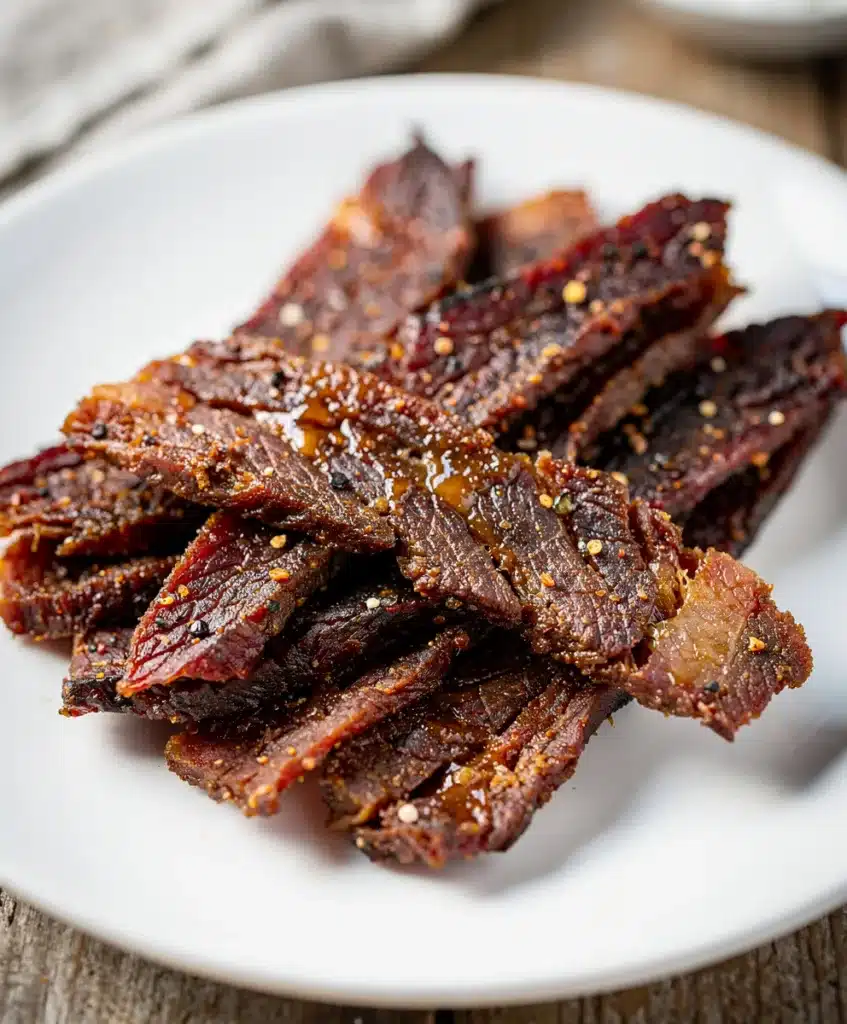
A Sunday afternoon spent prepping a big batch of jerky sets you up for a week of smart snacking and lunchbox additions. This protein homemade beef jerky stays fresh and satisfying, making healthy choices effortless. I remember my dad always had a bag of store-bought jerky tucked in his glove compartment for long drives, but it was always so tough and salty. When I started making my own, it was a revelation—tender, flavorful, and packed with the kind of clean protein that actually fuels your day. This isn’t just a snack; it’s a kitchen project that pays off all week long. Whether you’re packing lunches, need a post-workout bite, or just want something savory to reach for instead of chips, mastering this recipe is a game-changer. Let’s make high protein snacks that are truly worth the little bit of hands-off time.
Table of Contents
PrintProtein Homemade Beef Jerky

A simple, savory homemade beef jerky recipe perfect for meal prep. This high-protein snack is tender, flavorful, and free from preservatives. Ideal for lunchboxes, hikes, or post-workout fuel.
- Prep Time: 20min
- Cook Time: 6h
- Total Time: 8h 20min
- Yield: About 12 ounces of jerky 1x
- Category: snack
- Method: dehydrating
- Cuisine: American
- Diet: Gluten Free option
Ingredients
- 1.5 to 2 pounds lean beef (top round, eye of round, or flank steak)
- 2/3 cup low-sodium soy sauce (or tamari for gluten-free)
- 1/3 cup Worcestershire sauce
- 2 tablespoons pure maple syrup or honey
- 2 teaspoons smoked paprika
- 1 teaspoon garlic powder
- 1 teaspoon onion powder
- 1/2 teaspoon freshly ground black pepper
- 1/4 to 1/2 teaspoon cayenne pepper (optional)
- 1 teaspoon liquid smoke (optional)
Instructions
- Partially freeze the beef for 1-2 hours to make slicing easier. Slice the meat across the grain into 1/4-inch thick strips.
- In a medium bowl, whisk together the soy sauce, Worcestershire sauce, maple syrup, smoked paprika, garlic powder, onion powder, black pepper, cayenne, and liquid smoke (if using).
- Place the beef strips in a large resealable bag or shallow dish. Pour the marinade over the meat, ensuring all pieces are coated. Seal or cover and refrigerate for at least 4 hours, or ideally overnight.
- Preheat your oven to 175°F (or the lowest setting). Line baking sheets with wire racks.
- Remove the beef strips from the marinade, letting excess drip off. Arrange them in a single layer on the wire racks, ensuring they do not touch.
- Place the trays in the oven. Prop the oven door open slightly with the handle of a wooden spoon to allow moisture to escape.
- Dry the jerky for 4 to 6 hours. It is done when dry to the touch, bends without breaking, and has a firm, leathery texture. It will firm up more as it cools.
- Let the jerky cool completely on the racks before storing.
Notes
For tender jerky, always slice the meat across the grain. Using wire racks is essential for proper airflow and drying. Store in an airtight container at room temperature for up to 2 weeks, or freeze for longer storage.
Nutrition
- Serving Size: 4
- Calories: 70
- Sugar: 1
- Sodium: 300
- Fat: 2
- Saturated Fat: 1
- Unsaturated Fat: 1
- Trans Fat: 0
- Carbohydrates: 2
- Fiber: 0
- Protein: 12
- Cholesterol: 25
Ingredients List for Protein Homemade Beef Jerky

This protein homemade beef jerky recipe relies on simple, flavorful ingredients to create a deeply savory and satisfying snack. The magic is in the balance of salty, sweet, and smoky notes.
- 1 ½ to 2 pounds lean beef (top round, eye of round, or flank steak work beautifully)
- ⅔ cup low-sodium soy sauce (or tamari for gluten-free)
- ⅓ cup Worcestershire sauce
- 2 tablespoons pure maple syrup or honey
- 2 teaspoons smoked paprika
- 1 teaspoon garlic powder
- 1 teaspoon onion powder
- ½ teaspoon freshly ground black pepper
- ¼ to ½ teaspoon cayenne pepper (optional, for heat)
- 1 teaspoon liquid smoke (optional, but adds classic jerky depth)
Smart Swaps: For a gluten-free version, use tamari or coconut aminos. For a sugar-conscious option, swap the maple syrup for a sugar-free substitute or omit it entirely—the jerky will be more savory than sweet. If you love other beef recipes, the principles of seasoning here are similar to what makes our Skillet Beef Stroganoff so flavorful.
Timing for Your Homemade Jerky
- Prep Time: 20 minutes (plus 4-8 hours marinating)
- Cook Time: 4-6 hours
- Total Time: 4.5 to 8.5 hours (mostly hands-off)
While the total time looks long, remember that 95% of it is the meat marinating in your fridge and then slowly dehydrating. Your active time is minimal, making this one of the most efficient ways to stock your pantry with high protein snacks.
Step-by-Step Instructions for Perfect Homemade Jerky
Creating your own beef jerky is a simple process of slice, marinate, and dry. Follow these steps for foolproof results every time.
- Prep the Beef: Partially freeze your beef for 1-2 hours. This makes it much easier to slice thinly and evenly. Using a very sharp knife, slice the meat across the grain into ¼-inch thick strips. Slicing across the grain is the secret to tender jerky that doesn’t feel like leather.
- Make the Marinade: In a medium bowl, whisk together the soy sauce, Worcestershire sauce, maple syrup, smoked paprika, garlic powder, onion powder, black pepper, cayenne, and liquid smoke (if using).
- Marinate: Place the beef strips in a large resealable bag or shallow dish. Pour the marinade over the meat, ensuring every piece is coated. Seal the bag or cover the dish and refrigerate for at least 4 hours, or ideally overnight. This is where the flavor for your protein homemade beef jerky truly develops.
- Dry the Jerky: Preheat your oven to 175°F (or the lowest setting your oven allows, often "Warm"). Line baking sheets with wire racks. Remove the beef strips from the marinade, letting any excess drip off, and arrange them in a single layer on the racks, ensuring they are not touching.
- Slow Cook: Place the trays in the oven. Prop the oven door open slightly with the handle of a wooden spoon to allow moisture to escape. Dry the jerky for 4 to 6 hours. The jerky is done when it is dry to the touch, bends without breaking, and has a firm, leathery texture. It will continue to firm up slightly as it cools.
Nutritional Information
A 1-ounce serving (about 3-4 strips) of this homemade jerky provides approximately:
- Calories: 70
- Protein: 12g
- Fat: 2g
- Carbohydrates: 2g
This makes it an exceptional source of lean protein, perfect for fueling activities or curbing hunger between meals. Unlike many store-bought versions, you control the sodium and sugar, making it a cleaner choice for your high protein snacks rotation.
Equipment Needed
You don’t need a fancy dehydrator to make great jerky! Your regular kitchen has everything required.
- A sharp chef’s knife
- Cutting board
- Large mixing bowl or resealable bag
- Baking sheets
- Wire cooling racks (crucial for air circulation)
- Oven
Why You’ll Love This Protein Homemade Beef Jerky
- Cost-Effective & Customizable: Making your own beef jerky is significantly cheaper than buying premium bags at the store, and you get to dictate the flavor, salt, and spice level.
- Meal Prep Champion: A single batch provides a week’s worth of portable protein. Toss it in lunchboxes, gym bags, or your desk drawer.
- Clean Ingredient Control: You know exactly what’s in it—no preservatives, excess sugar, or unpronounceable additives. It’s pure, flavorful protein.
- Satisfies Savory Cravings: This homemade jerky is the perfect answer to chip or cracker cravings, offering a salty, chewy, and deeply satisfying bite that’s actually good for you.
Healthier Alternatives for the Recipe

This recipe is naturally high in protein and can be easily adapted.
- Low-Sodium: Use reduced-sodium soy sauce and Worcestershire, and consider using coconut aminos which are naturally lower in sodium.
- Sugar-Free: Omit the maple syrup or use a monk fruit sweetener. The jerky will be more savory and less sweet, which many prefer.
- Different Proteins: While beef is classic, you can use the same marinade and method for turkey breast or even extra-firm tofu (pressed thoroughly) for a plant-based high protein snack.
Serving Suggestions
While delicious on its own, this protein homemade beef jerky can be part of a larger snack spread or meal.
- Chop it up and add to a trail mix with nuts, seeds, and a few dark chocolate chips.
- Crumble it over a salad for a hearty, salty protein boost.
- Serve it alongside cheese, crackers, and fruit for a simple charcuterie-style board.
- It’s the perfect companion on road trips, hikes, or long workdays. If you love other make-ahead beef dishes, this jerky pairs well with the easy, comforting flavors of our Slow Cooker Beef Stew.
Common Mistakes to Avoid
- Slicing With the Grain: This is the #1 reason for tough jerky. Always slice across the muscle fibers for a tender chew.
- Uneven Slices: Take the time to slice consistently. Thicker pieces will remain moist inside while thinner pieces become brittle.
- Skipping the Wire Rack: Laying jerky directly on a baking sheet steams it instead of drying it. The rack is non-negotiable for proper airflow and texture.
- Overcooking: Jerky should be pliable, not snap like a dry twig. Start checking at the 4-hour mark. Remember, it firms up as it cools.
Storing Tips for the Recipe

Proper storage keeps your homemade jerky fresh and safe.
- Cool Completely: Before storing, let the jerky cool completely on the wire racks to prevent condensation.
- Airtight Container: Store in an airtight container or glass jar at room temperature for up to 2 weeks. For longer storage, keep it in the refrigerator for up to 2 months.
- Freezing: For long-term storage, place the jerky in a freezer-safe bag, remove as much air as possible, and freeze for up to 6 months. Thaw at room temperature. This make-ahead strategy is as useful as prepping a big batch of Crowd Favorite Ground Beef Casserole for future easy dinners.
Conclusion
Making your own protein homemade beef jerky is one of those satisfying kitchen projects that blends simplicity with spectacular results. You get a stash of wholesome, flavorful snacks that support your busy life without the grocery store markup or mystery ingredients. It’s comfort food in a portable, protein-packed form. I hope this recipe becomes a staple in your home, just like it has in mine. Give it a try this weekend—your future self will thank you on every busy afternoon. Let me know how your batch turns out in the comments below, and don’t forget to tag @HarmonyMeal on Pinterest so I can see your creations! If you’re looking for more ways to enjoy beef, try our cozy One Pot Beef Taco Pasta for a family-friendly dinner.
FAQs about Protein Homemade Beef Jerky
What is the best cut of beef for high protein jerky?
Lean cuts like flank steak, top round, or eye of round are best for high protein beef jerky. They have minimal fat, resulting in a higher protein content per serving.
How can I increase the protein content of homemade beef jerky?
Choose leaner cuts of beef, minimize added sugars in your marinade, and avoid adding extra ingredients like fruit or vegetables that dilute the protein concentration. Consider adding protein powder to your marinade, but be aware of altered texture and flavor.
Is homemade beef jerky a good source of protein?
Yes, homemade beef jerky is an excellent source of protein. It’s a concentrated form of protein due to the drying process, which removes moisture and increases the protein density.
How much protein is in a serving of homemade beef jerky?
The protein content varies based on the cut of beef and preparation method, but typically, a 1-ounce (28-gram) serving of homemade beef jerky contains around 9-13 grams of protein.
What’s the best way to store homemade beef jerky to preserve its protein?
Store homemade beef jerky in an airtight container in a cool, dry place. This helps prevent moisture absorption and bacterial growth, preserving both the protein and the jerky’s overall quality. Vacuum sealing is also a great option for longer storage.
Is it cheaper to make my own high-protein beef jerky?
Generally, yes. While the initial cost of ingredients and equipment (dehydrator or oven) might seem high, making your own beef jerky is usually more cost-effective in the long run compared to buying pre-made jerky, especially if you consume it regularly. You also have complete control over the ingredients and protein content.
💬 Let’s Stay Connected!
For daily recipes, kitchen tips, and exclusive content, follow me on:
👉 Facebook for behind-the-scenes & community fun
👉 Pinterest for visual inspiration & meal ideas
👉 X (Twitter) for quick tips & trending recipes
📲 Join the flavor journey, your next favorite recipe is just a follow away!