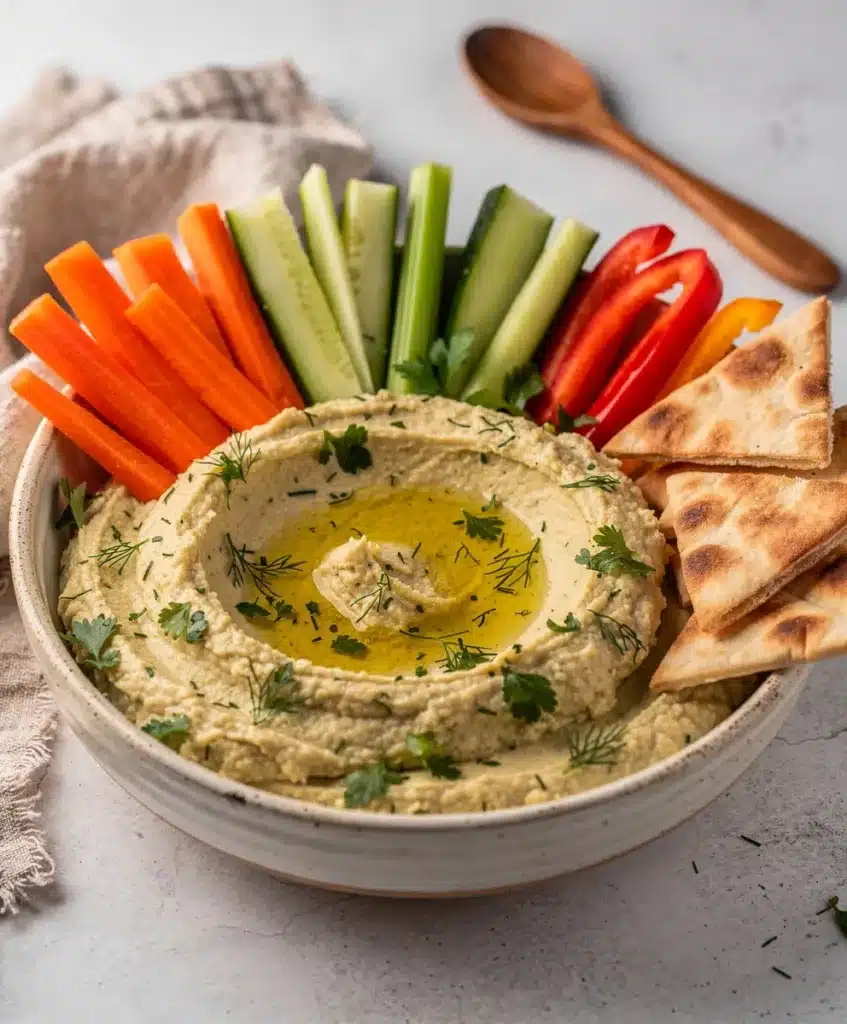
Hummus has ancient roots, but this version feels distinctly fresh and modern. I love how the lemon and herbs brighten the traditional chickpea base, creating a lemon herb hummus that’s perfect for today’s table. It reminds me of those first truly warm afternoons in spring, when you just want to throw open the windows and eat something that tastes as bright and hopeful as the sunshine. This isn’t just a dip. It’s a whole mood. A bowl of this lemon herb hummus on the counter, surrounded by crisp veggies and warm pita, has a way of slowing down the clock and turning an ordinary snack into a little celebration. It’s one of those spring food ideas that feels effortless yet special, a reliable star for any gathering or a quiet moment for yourself. Simple ingredients, warm memories. Let’s make it.
Table of Contents
Lemon Herb Hummus

A bright and modern take on classic hummus, bursting with fresh lemon, parsley, and dill. This creamy dip is perfect for spring gatherings, snacks, or as a versatile spread. It comes together quickly with simple ingredients for a flavor that tastes like sunshine.
- Prep Time: 10min
- Cook Time: 0min
- Total Time: 10min
- Yield: About 3 cups
- Category: snack
- Method: blending
- Cuisine: Mediterranean
- Diet: Vegan, Gluten Free
Ingredients
- 2 (15-ounce) cans chickpeas, drained and rinsed (reserve the liquid)
- 1/3 cup fresh lemon juice (from about 2 large lemons)
- 1/3 cup well-stirred tahini
- 2-3 cloves garlic, minced
- 1/2 cup packed fresh parsley leaves
- 1/4 cup packed fresh dill fronds
- 1/2 teaspoon ground cumin
- 1/2 teaspoon fine sea salt, plus more to taste
- 1/4 teaspoon freshly ground black pepper
- 1/4 cup extra-virgin olive oil, plus more for drizzling
- 3-5 tablespoons aquafaba (reserved chickpea liquid) or ice water
Instructions
- In a food processor, combine chickpeas, lemon juice, tahini, garlic, cumin, salt, and pepper. Process for 1 minute until coarse and thick.
- Scrape down sides. Add parsley, dill, and 1/4 cup olive oil. Process for another minute until herbs are finely chopped and mixture is greener.
- With processor running, slowly stream in aquafaba or ice water, 1 tablespoon at a time. Start with 3 tablespoons, then stop and scrape bowl. Process for 2-3 minutes until very smooth and creamy. Add more liquid if needed for desired consistency.
- Taste and adjust seasoning with more salt, lemon, or cumin as desired.
- Transfer to a serving bowl. Create swirls with a spoon, drizzle with olive oil, and garnish with extra herbs, paprika, or whole chickpeas.
Notes
For ultra-creamy texture, peel the chickpeas. Always use fresh herbs, not dried. Process for the full time after adding liquid to achieve a light, whipped texture. Store in an airtight container in the refrigerator for up to 5 days.
Ingredients List
Lemon herb hummus starts with a handful of simple, vibrant ingredients that come together to create something truly greater than the sum of its parts. You likely have most of these in your pantry already.
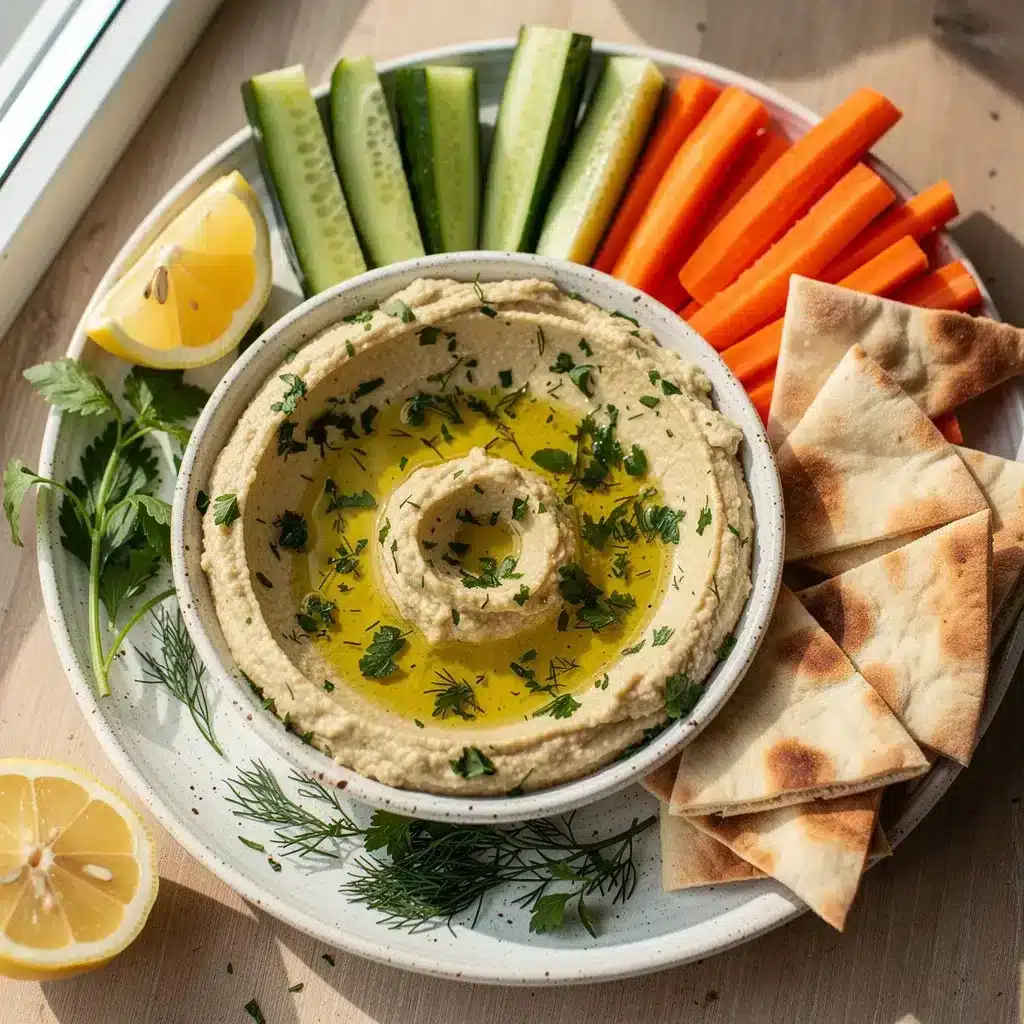
- 2 (15-ounce) cans chickpeas, drained and rinsed (reserve the liquid!)
- 1/3 cup fresh lemon juice (from about 2 large lemons)
- 1/3 cup well-stirred tahini
- 2-3 cloves garlic, minced
- 1/2 cup packed fresh parsley leaves
- 1/4 cup packed fresh dill fronds
- 1/2 teaspoon ground cumin
- 1/2 teaspoon fine sea salt, plus more to taste
- 1/4 teaspoon freshly ground black pepper
- 1/4 cup extra-virgin olive oil, plus more for drizzling
- 3-5 tablespoons aquafaba (the reserved liquid from the chickpeas) or ice water
Smart Swaps & Notes:
- Chickpeas: For an ultra-silky texture, you can peel the chickpeas by gently rubbing them between paper towels. It’s a bit of a project, but it makes a difference. For a different creamy base, try my Creamy White Bean Hummus.
- Herbs: The parsley and dill are non-negotiable for that garden-fresh flavor, but you can play with additions. A tablespoon of fresh mint or chives is lovely.
- Tahini: A good, runny tahini is key. If yours is thick and pasty, give it a really good stir or warm it slightly.
- Garlic: If raw garlic is too sharp for you, try roasting a whole head of garlic and squeezing out 2-3 cloves of the sweet, mellow paste.
Timing
This lemon herb hummus is the definition of a quick, satisfying project. From pantry to platter in minutes.
- Prep Time: 10 minutes
- Cook Time: 0 minutes
- Total Time: 10 minutes
That’s faster than ordering takeout, and infinitely more delicious. It’s the perfect last-minute hero for when guests pop over or you need a vibrant spring snack in a flash.
Step-by-Step Instructions
Making perfect lemon herb hummus is less about fancy technique and more about paying attention to texture and balance. Here’s how to get it right.
1. Combine the Base. In the bowl of a food processor, combine the drained chickpeas, lemon juice, tahini, minced garlic, cumin, salt, and pepper. Process for a full minute until the mixture is mostly broken down and looks somewhat coarse and thick.
2. Add the Herbs and Oil. Scrape down the sides of the bowl. Add the packed parsley and dill, and pour in the 1/4 cup of olive oil. Process again for another minute. The herbs will be finely chopped and the mixture will start to look greener and smoother.
3. Achieve Creamy Perfection. This is the most important step. With the processor running, slowly stream in the aquafaba (chickpea liquid) or ice water, one tablespoon at a time. Stop and scrape the bowl after adding 3 tablespoons. Process for a full 2-3 minutes at this stage. This is what transforms it from a paste into a cloud-like, whipped lemon herb hummus. Add more liquid only if needed to reach your desired consistency. It should be smooth, creamy, and hold its shape.
4. Taste and Adjust. Stop the processor and taste. This is your moment. Does it need more salt? A pinch more cumin for earthiness? Another squeeze of lemon for brightness? Adjust now.
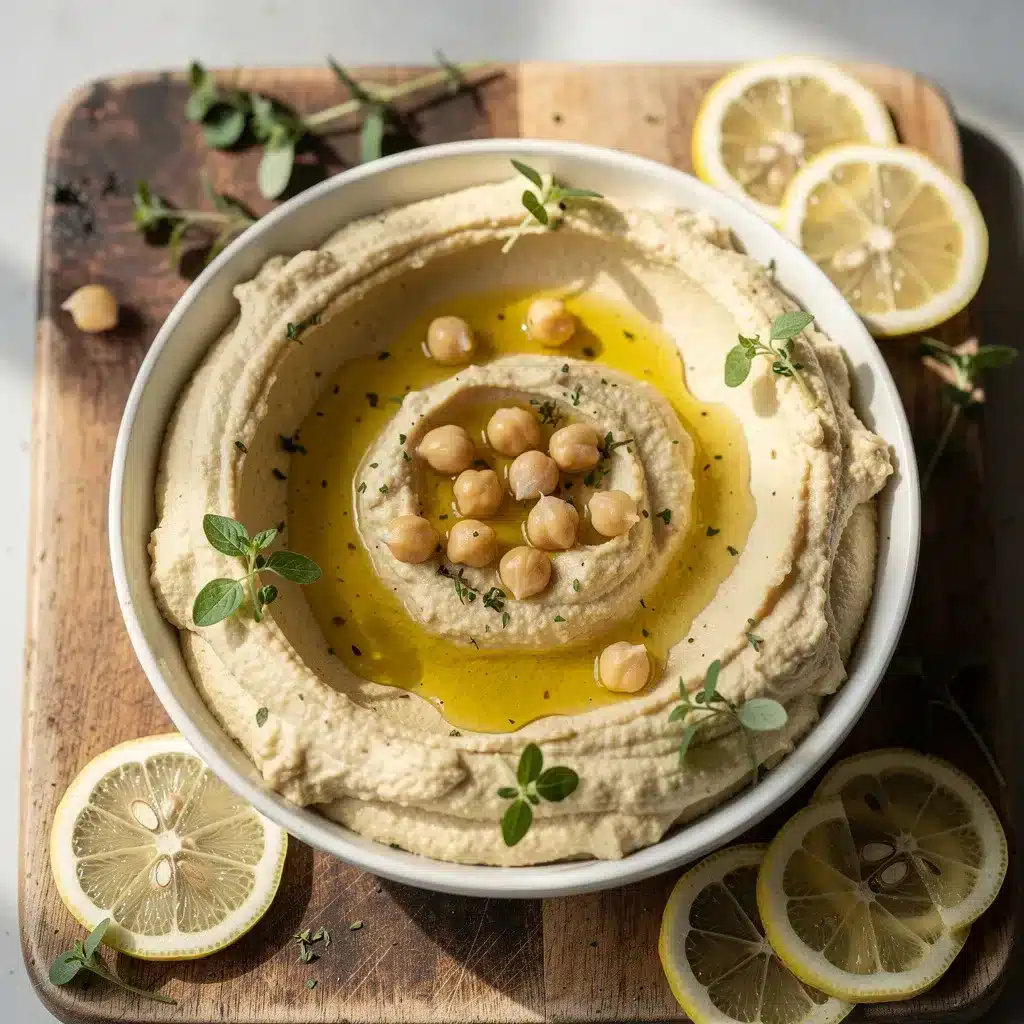
5. Serve. Transfer your lemon herb hummus to a shallow bowl. Use the back of a spoon to create swirls on the surface. Drizzle generously with more extra-virgin olive oil. A final sprinkle of chopped fresh herbs, a dusting of paprika, or a few whole chickpeas make it look beautiful.
Nutritional Information
A 1/4-cup serving of this lemon herb hummus provides approximately:
- Calories: 150
- Fat: 10g (mostly heart-healthy unsaturated fats from olive oil and tahini)
- Carbohydrates: 12g
- Fiber: 3g
- Protein: 5g
It’s a nutrient-dense choice, offering plant-based protein from the chickpeas, healthy fats, and a good dose of vitamins from the fresh herbs and lemon. The garlic and olive oil are celebrated for their anti-inflammatory properties, making this a snack that truly nourishes.
Equipment Needed
You don’t need much to make this spring party food staple. A regular kitchen, regular time, great results.
- A food processor is essential for that ultra-creamy texture. A high-powered blender can work in a pinch, but you may need to stop and scrape more often.
- A rubber spatula for scraping down the sides.
- A liquid measuring cup for the tahini, oil, and aquafaba.
- A small bowl for reserving the aquafaba.
- A serving bowl for the finished masterpiece.
Why You’ll Love This Recipe
This lemon herb hummus isn’t just another dip. It’s a kitchen workhorse you’ll come back to again and again.
- Unbeatable Freshness: The combination of lemon, parsley, and dill tastes like a spring garden in a bowl. It’s a world away from store-bought versions.
- Meal Prep Champion: It keeps beautifully for days, making it the perfect make-ahead element for lunches, snacks, or impromptu gatherings.
- Endlessly Versatile: Beyond a dip, it’s a glorious sandwich spread, a vibrant veggie bowl topper, or a delicious partner for grilled meats.
- Crowd-Pleasing & Inclusive: Naturally vegan, gluten-free, and nut-free, it’s a safe and delicious option for almost any guest list.
- Joyfully Simple: No cooking, minimal cleanup, and a result that feels gourmet. Food that feels like home, without the fuss.
Healthier Alternatives for the Recipe
This lemon herb hummus is already quite wholesome, but you can tweak it to fit specific dietary goals.
- Lower Fat: Reduce the olive oil to 2 tablespoons and rely more on aquafaba for creaminess. The flavor will be slightly less rich but still delicious.
- Higher Protein: Stir in a scoop of plain, unflavored plant-based protein powder after processing, or serve it with high-protein dippers like edamame or baked tofu slices.
- Oil-Free: Omit the olive oil entirely and use all aquafaba or vegetable broth. The texture will be less unctuous but still creamy.
- Different Bean Base: For a change, try cannellini beans or even steamed cauliflower for a lower-carb version. The method remains the same.
Serving Suggestions
This is where your lemon herb hummus truly shines. It’s the centerpiece of so many spring food ideas.
- The Classic Platter: Surround it with warm pita triangles, crisp cucumber spears, bell pepper strips, carrot sticks, and radishes. Add some kalamata olives and marinated feta for a Mediterranean feast.
- As a Spread: Slather it on wraps, sandwiches, or toast. Top with sliced tomatoes, red onion, and sprouts for an epic veggie sandwich.
- Bowl Food: Add a generous scoop to a grain bowl filled with quinoa, roasted vegetables, and a simple lemon vinaigrette.
- Spring Party Food: Serve it in a hollowed-out red cabbage or a small bread bowl for a beautiful presentation. It pairs wonderfully with other dips like my Whipped Feta Dip Hot Honey or my zesty Dill Pickle Ranch Dip for a diverse snack table.
- Easter Recipes Appetizers: This bright, green-flecked hummus is a natural fit for an Easter brunch or dinner starter. Serve it in individual small cups with a single, elegant crudité for dipping.
Common Mistakes to Avoid
A few small missteps can keep your lemon herb hummus from being its best self. Here’s what to watch for.
- Not Processing Long Enough: This is the #1 reason for grainy hummus. After adding the liquid, let that food processor run for a full 2-3 minutes. It whips air into the mixture, creating an incredibly smooth, light texture.
- Using Old, Dry Tahini: Tahini can separate and become dry and bitter at the bottom of the jar. Always stir it thoroughly from the bottom up before measuring. Taste it—it should be nutty and smooth, not sharp.
- Skipping the Aquafaba/Water: The liquid is crucial for creaminess. If you add only the solid ingredients, you’ll get a thick, pasty spread, not a dip. Add it slowly until you achieve the perfect, spreadable consistency.
- Underseasoning: Chickpeas need salt and acid. Don’t be shy. Always taste and adjust at the end. The flavors should be bright and balanced, not flat.
- Using Dried Herbs: For this recipe, fresh herbs are non-negotiable. Dried parsley and dill will not give you that vibrant, garden-fresh flavor and can taste dusty.
Storing Tips for the Recipe
This lemon herb hummus is a fantastic make-ahead option for your spring snacks lineup.
- Refrigerator: Store in an airtight container for up to 5 days. The flavors actually meld and improve after a day. If the surface darkens slightly, just give it a stir.
- Freezer: You can freeze lemon herb hummus for up to 2 months. Place it in a freezer-safe container, leaving a little space for expansion. Thaw overnight in the refrigerator. The texture may be slightly less creamy after thawing—a quick stir or a tiny drizzle of fresh olive oil will bring it right back.
- Serving Leftovers: If it thickens in the fridge, stir in a teaspoon of warm water or lemon juice to loosen it up before serving. Always give it a fresh drizzle of olive oil and a herb garnish when you bring it back out.
Conclusion
This lemon herb hummus is more than a recipe. It’s a little jar of springtime, a promise of fresh flavors and shared moments. It proves that the most satisfying foods often come from the simplest processes: a few good ingredients, a trusty food processor, and the intention to make something delicious. Whether it’s the star of your Easter recipes appetizers spread, a quick spring snack after school, or a quiet treat for yourself with a good book, I hope it brings as much light to your table as it does to mine.
Comfort food, made easy. If you love this bright, herby version, you might also enjoy the smoky depth of my Roasted Red Pepper Walnut Dip or the spicy, creamy kick of Jalapeno Popper Dip for your next gathering.
I’d love to hear how yours turns out. Did you add an extra herb? Find the perfect dipper? Let me know in the comments below, and if you share a photo, don’t forget to tag @HarmonyMeal. Happy dipping.
FAQs about Lemon Herb Hummus
What herbs go well in hummus?
Parsley, cilantro, dill, mint, and basil are all excellent choices for adding fresh, herbaceous flavor to hummus. Use them individually or in combination for a vibrant taste. Rosemary and thyme can also be used sparingly.
What is hummus made of?
Traditional hummus is made from chickpeas, tahini (sesame seed paste), lemon juice, olive oil, and garlic. Salt and other spices are often added to enhance the flavor.
How long does homemade hummus last?
Homemade hummus typically lasts for 3-5 days when stored properly in an airtight container in the refrigerator.
What is the best way to store hummus?
Store hummus in an airtight container in the refrigerator. A thin layer of olive oil on top can help prevent it from drying out.
Is lemon hummus healthy?
Yes, lemon hummus can be a healthy snack or side dish. It is a good source of plant-based protein, fiber, and healthy fats. The lemon adds Vitamin C and aids in digestion.
What do you eat lemon hummus with?
Lemon herb hummus is delicious with pita bread, vegetables (like carrots, celery, cucumbers, and bell peppers), crackers, or as a spread on sandwiches and wraps. It also makes a great addition to charcuterie boards.
💬 Let’s Stay Connected!
For daily recipes, kitchen tips, and exclusive content, follow me on:
👉 Facebook for behind-the-scenes & community fun
👉 Pinterest for visual inspiration & meal ideas
👉 X (Twitter) for quick tips & trending recipes
📲 Join the flavor journey, your next favorite recipe is just a follow away!