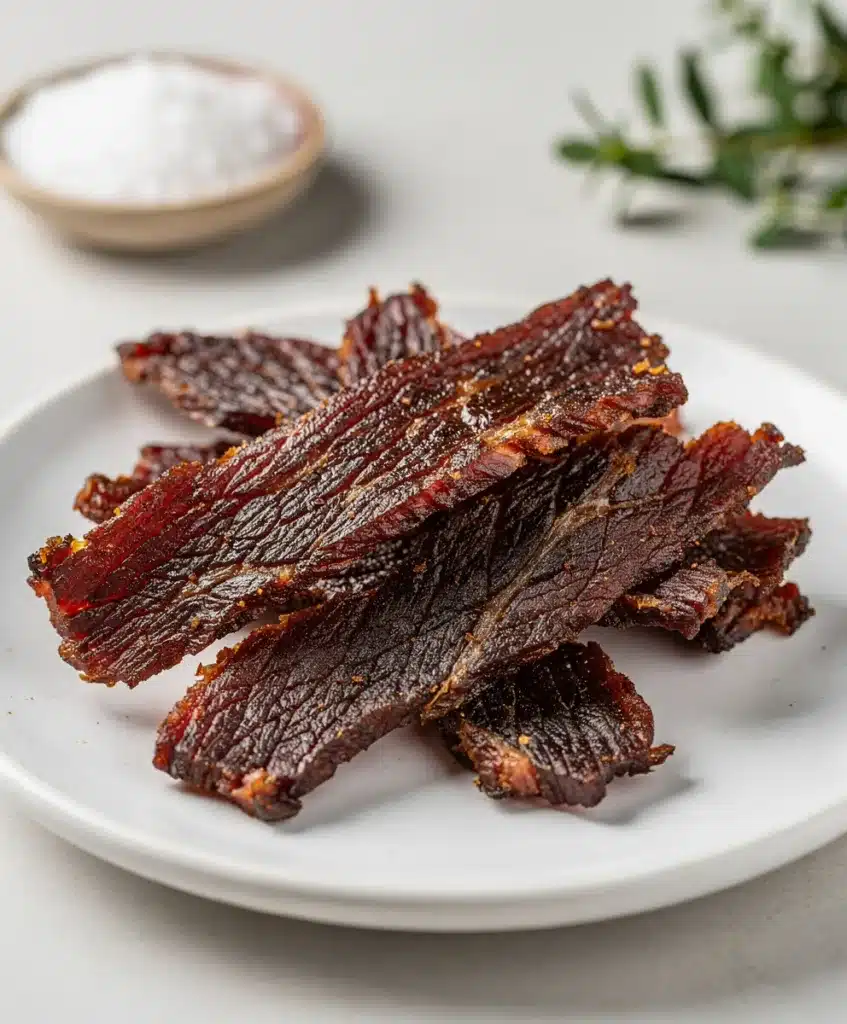
My kids now request this homemade smoked beef jerky over any bagged snack from the store. Watching them devour a batch I know is made with clean, simple ingredients is one of my greatest kitchen joys. There’s something deeply satisfying about transforming a simple cut of beef into a smoky, chewy, flavor-packed snack. It’s a process that feels connected to tradition, to the slow art of barbecue, and to the simple pleasure of knowing exactly what’s in your food. Forget the over-salted, preservative-filled strips from the gas station. This smoked beef jerky recipe brings the soul of real barbecue right into your kitchen, with a deep, smoky flavor and a perfectly tender chew that you just can’t buy.
Table of Contents
PrintSmoked Beef Jerky

This smoked beef jerky brings the soul of real barbecue right into your kitchen. It features a deep, smoky flavor and a perfectly tender chew made with clean, simple ingredients, far superior to store-bought versions.
- Prep Time: 30min
- Cook Time: 6h
- Total Time: 12h 30min
- Yield: Approximately 1 pound of jerky
- Category: snack
- Method: smoking
- Cuisine: American
- Diet: Gluten Free option
Ingredients
- 2 to 2.5 pounds lean beef (top round, eye of round, or flank steak)
- 3/4 cup soy sauce (or tamari for gluten-free)
- 1/4 cup Worcestershire sauce
- 2 tablespoons brown sugar
- 2 tablespoons pure maple syrup or honey
- 1 tablespoon smoked paprika
- 2 teaspoons freshly cracked black pepper
- 1 teaspoon garlic powder
- 1 teaspoon onion powder
- 1/2 teaspoon cayenne pepper (optional)
- 1 teaspoon curing salt, Prague Powder #1 (optional)
Instructions
- Prep the beef by slicing it while partially frozen into 1/4-inch thick strips, trimming any fat. Slice with or against the grain as preferred.
- Make the marinade by whisking together soy sauce, Worcestershire, brown sugar, maple syrup, smoked paprika, black pepper, garlic powder, onion powder, and cayenne in a large bowl or bag.
- Add the beef strips to the marinade, ensuring they are submerged. Seal and refrigerate for at least 8 hours, ideally overnight.
- Drain the beef strips and discard the marinade. Pat each strip thoroughly dry with paper towels and let sit at room temperature for 30 minutes.
- Preheat your smoker to 180°F using hickory or mesquite wood for best flavor.
- Arrange the dried beef strips directly on the grill grates without overlapping.
- Smoke the jerky for 4 to 6 hours, until it is dry to the touch, bends without breaking, and has a firm, leathery texture.
- Let the jerky cool completely on a wire rack before storing.
Notes
For a chewier texture, slice the beef with the grain. For a more tender bite, slice against the grain. The jerky is done when it bends like leather and may show small white fibers but does not snap. Store in an airtight container in a cool place for 1-2 weeks, in the fridge for up to 2 months, or in the freezer for up to 6 months.
Ingredients List

The magic of this smoked beef jerky recipe lies in its simplicity. You don’t need a laundry list of hard-to-find ingredients to achieve that authentic barbecue taste. The marinade works its magic, and the smoker does the rest, creating a snack that’s far superior to anything store-bought.
- 2 to 2.5 pounds lean beef (top round, eye of round, or flank steak work beautifully)
- ¾ cup soy sauce (or tamari for gluten-free)
- ¼ cup Worcestershire sauce
- 2 tablespoons brown sugar
- 2 tablespoons pure maple syrup or honey
- 1 tablespoon smoked paprika
- 2 teaspoons freshly cracked black pepper
- 1 teaspoon garlic powder
- 1 teaspoon onion powder
- ½ teaspoon cayenne pepper (optional, for a kick)
- 1 teaspoon curing salt, Prague Powder #1 (optional, for longer shelf life and classic color)
Smart Swaps: For a coconut aminos version, replace the soy and Worcestershire with 1 cup of coconut aminos. If you don’t have smoked paprika, use regular paprika but know you’ll miss a layer of that foundational smoke. The sweetener is flexible, too; all honey or all brown sugar works just fine.
Timing
This isn’t a last-minute recipe, but the hands-off time is what makes it perfect for a weekend project. The active prep is minimal, letting the marinade and smoker do the heavy lifting.
- Prep Time: 30 minutes (plus 8-24 hours marinating)
- Cook Time: 4-6 hours
- Total Time: 12-30 hours (mostly unattended)
Think of it like my favorite Slow Cooker Beef Stew—you put in a little upfront effort for a huge payoff later, with flavors that only get better with time.
Step-by-Step Instructions
Making pellet grill jerky is a wonderfully straightforward process. The key is in the slicing and the patience during the smoke. Follow these steps for foolproof, delicious results every time.
- Prep the Beef: Start with a very cold, partially frozen piece of beef. This makes slicing thin, even strips much easier. Trim away any large pieces of visible fat or silverskin. Fat doesn’t dry well and can cause spoilage. Slice the meat with the grain for a chewier, traditional jerky texture, or against the grain for a more tender, easier-to-bite jerky. Aim for strips about ¼-inch thick.
- Make the Marinade: In a large bowl or resealable gallon bag, whisk together the soy sauce, Worcestershire, brown sugar, maple syrup, smoked paprika, black pepper, garlic powder, onion powder, and cayenne. If using, dissolve the curing salt in a tablespoon of warm water first, then add it to the mix.
- Marinate: Add all the beef strips to the marinade, ensuring each piece is fully submerged. Seal the bag or cover the bowl and refrigerate for a minimum of 8 hours, or ideally overnight. This long soak is non-negotiable for deep flavor penetration.
- Prep for Smoking: Remove the beef from the fridge and drain the strips in a colander. Discard the marinade. Pat each strip thoroughly dry with paper towels. This step is crucial for proper drying and smoke adhesion. Let the strips sit at room temperature for about 30 minutes while you preheat your smoker.
- Smoke: Preheat your smoker to 180°F. For the best hickory jerky flavor, use a strong wood like hickory or mesquite pellets or chips. If your smoker has a smoke setting, use it. Arrange the beef strips directly on the grill grates, ensuring they are not touching or overlapping. Smoke the jerky for 4 to 6 hours. The time will vary based on thickness and humidity. The jerky is done when it is dry to the touch, bends without breaking, and has a firm, leathery texture. It should not be crispy.
Nutritional Information
This homemade smoked beef jerky is a fantastic high-protein, low-carb snack. Per 1-ounce serving (approx. 3-4 strips): Calories: 70 | Protein: 11g | Fat: 2g | Carbohydrates: 2g | Sugar: 1g. It’s packed with iron and makes for a satisfying, energy-sustaining bite, far healthier than the sugar-laden versions you find on shelves.
Equipment Needed
You don’t need a professional setup to make incredible smoker jerky recipe results. A few key tools will set you up for success.
- A reliable smoker (pellet, electric, or charcoal all work)
- Sharp chef’s knife or slicing knife
- Large resealable plastic bag or non-reactive bowl for marinating
- Paper towels
- Wire cooling rack (optional, for drying after marinating)
Why You’ll Love This Recipe
This smoked beef jerky recipe earns a permanent spot in your snack rotation for so many reasons.
- Real Barbecue Flavor at Home: This isn’t just dried meat; it’s true bbq jerky with a deep, smoky soul you can taste in every bite.
- You Control the Ingredients: No mystery chemicals, excess sodium, or MSG. Just simple, pronounceable ingredients.
- Perfect for Gifting: A bag of homemade jerky is a heartfelt, impressive gift for any meat lover.
- Meal Prep Champion: It stores for weeks, making it the ultimate grab-and-go protein for hikes, lunches, or afternoon cravings.
- A Fun Kitchen Project: The process is meditative and rewarding, connecting you to a timeless food preservation technique.
Healthier Alternatives for the Recipe

This smoked beef jerky is already quite wholesome, but you can easily tweak it to fit specific dietary needs.
- Low-Sodium: Use low-sodium soy sauce and omit the Worcestershire. Boost flavor with extra garlic, onion, and black pepper.
- Sugar-Free: Replace the brown sugar and maple syrup with a sugar-free substitute like allulose or monk fruit sweetener that measures 1:1 like sugar.
- Whole30/Paleo: Use coconut aminos instead of soy sauce, and ensure your Worcestershire is compliant (or make your own). Use date paste instead of brown sugar.
Serving Suggestions
While this hickory jerky is sublime eaten straight from the bag, it’s also a fantastic flavor booster in other dishes.
- Chop it up and add to a trail mix with nuts, seeds, and a few dark chocolate chips.
- Crumble it over a green salad for a smoky, salty, protein-packed crunch.
- Serve it on a charcuterie board alongside sharp cheeses, olives, and dried fruit.
- It’s the perfect companion to other smoky, savory dishes like my Slow Cooker BBQ Meatballs or a hearty Skillet Beef Stroganoff.
Common Mistakes to Avoid
A few small missteps can affect your smoked beef jerky’s texture and safety. Here’s what to watch for.
- Slicing Unevenly: Inconsistent thickness means some pieces will dry out and burn while others remain underdone. Use a very sharp knife and take your time.
- Skipping the Dry Step: Not patting the marinated strips bone-dry prevents proper smoke adhesion and can lead to steaming instead of drying.
- Overcrowding the Smoker: If the strips are touching, they won’t dry evenly. Air needs to circulate around each piece.
- Rushing the Smoke with High Heat: Jerky is a low-and-slow process. Temperatures above 200°F can cook the outside too fast, trapping moisture inside and creating a tough, brittle texture.
- Not Testing for Doneness: Relying solely on time is a mistake. Always do the bend test. A properly dried piece of jerky will bend like leather and may show small white fibers when bent, but it won’t snap.
Storing Tips for the Recipe

Proper storage is key to enjoying your homemade smoked beef jerky for weeks.
- Cool Completely: Let the jerky cool to room temperature on a wire rack before storing. Any residual warmth will create condensation and moisture.
- Airtight is Right: Store the jerky in an airtight container or a vacuum-sealed bag. A glass jar with a tight lid works wonderfully.
- Counter or Fridge: For short-term use (1-2 weeks), storing in a cool, dark pantry is fine. For longer storage (up to 2 months), keep it in the refrigerator. The optional curing salt extends this shelf life significantly.
- Freezer for the Long Haul: For up to 6 months, freeze your jerky in a vacuum-sealed bag or a very airtight freezer container. It thaws quickly at room temperature.
- Check for Moisture: If you see any signs of moisture in the container, spread the jerky out on a baking sheet and warm it in a 170°F oven for 15-20 minutes to re-dry it before storing again.
Conclusion
Making your own smoked beef jerky is one of those kitchen endeavors that feels both primal and profoundly rewarding. The smell of hickory smoke curling around strips of marinated beef, the anticipation as they slowly transform into a perfect, chewy snack—it’s a simple joy. This recipe delivers that authentic, barbecue-pit flavor right in your own backyard, with a clean ingredient list you can feel good about. It’s a staple in our house for road trips, lunch boxes, and those 3 p.m. hunger pangs. I hope it becomes one in yours, too.
If you love the process of slow-smoked meats, you might also enjoy my hands-off approach to Slow Cooker Pulled Pork or the easy, flavorful simplicity of a Sheet Pan Sausage & Vegetables dinner. Now, I’d love to hear from you! What’s your favorite wood for smoking? Did you make it spicy? Let me know how your batch of homemade smoked beef jerky turns out in the comments below.
FAQs about Smoked Beef Jerky
What is smoked beef jerky?
Smoked beef jerky is a type of dried meat made by curing beef strips with spices and then slowly smoking them to add flavor and preserve the meat.
How is smoked beef jerky made?
It is made by marinating beef slices in a seasoned brine or dry rub, then smoking them at a low temperature to dry out the meat while infusing it with a smoky flavor.
Is smoked beef jerky healthy?
Smoked beef jerky can be a healthy snack as it is high in protein and low in fat, but its sodium content may be high, so it should be consumed in moderation.
How long does smoked beef jerky last?
Properly stored smoked beef jerky can last 1 to 2 months at room temperature and up to 6 months or longer if refrigerated or frozen.
Can smoked beef jerky be made at home?
Yes, home smoking of beef jerky is popular and can be done using a smoker, dehydrator, or oven with the right preparation and safety measures.
What wood is best for smoking beef jerky?
Common woods used include hickory, mesquite, apple, and cherry, each providing distinct flavors that enhance the taste of smoked beef jerky.
💬 Lets Stay Connected!
For daily recipes, kitchen tips, and exclusive content, follow me on:
👉 Facebook for behind the scenes and community fun
👉 Pinterest for visual inspiration and meal ideas
👉 X (Twitter) for quick tips and trending recipes
📲 Join the flavor journey, your next favorite recipe is just a follow away!